Saree Tying Styles Across India, From Aatpoure to Nivi
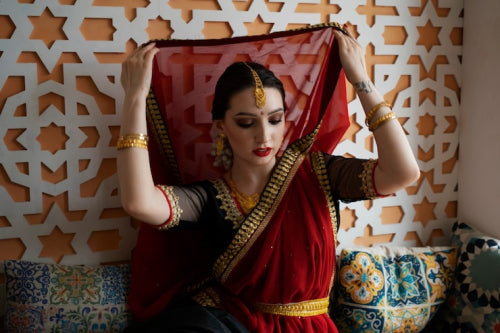
Picture the vibrant chaos of Kolkata's Durga Puja, with rhythmic chants filling the air and the aroma of incense lingering as women move gracefully in sarees draped in the classic Aatpoure style, each fold carrying echoes of ancestral tales. Or envision a chic wedding in New York, where an Indian diaspora bride opts for the refined Nivi drape, seamlessly merging heritage with modern sophistication. Far from mere garments, sarees serve as living tapestries of cultural expression, adaptable and enduring, captivating enthusiasts across the globe.
In this comprehensive exploration of saree tying styles across India, we delve into how these age-old draping methods are enchanting international audiences, from India's core to expatriate groups in the United States, Singapore, Australia, the United Kingdom, and the United Arab Emirates. As IndieHaat leads the charge in promoting genuine, artisan-crafted sarees obtained directly from creators, this analysis not only celebrates the aesthetic allure of these techniques but also examines the obstacles and prospects in delivering them to selective global consumers.
The saree stands as an enduring emblem of India's multifaceted cultural heritage, with every region infusing its distinct story into the weave. In recent times, it is undergoing a notable resurgence, driven by heightened enthusiasm for eco-conscious and handcrafted apparel. Recent analyses reveal that the India saree market attained a valuation of USD 5.76 billion in 2024, with forecasts suggesting an expansion to USD 10.33 billion by 2033, achieving a compound annual growth rate of 6.70 percent between 2025 and 2033. This upward trajectory is largely attributed to escalating preferences for environmentally sustainable handwoven sarees, reinforced by state-backed programs including Geographical Indication labels and the Handloom Mark, which promote legitimacy and improve the economic well-being of weavers. Furthermore, the accelerated embrace of digital retail platforms, enhanced through artificial intelligence for tailored options, digital fittings, and interactive social purchasing, is enhancing availability and user-friendliness for purchasers. Celebrity promotions and sustainability-oriented marketing strategies are also engaging millennial and Gen Z consumers, thereby elevating the sector's overall presence in India.
Fast fashion erodes cultural heritage, sidelining artisans and reducing traditions to trends. At IndieHaat, we champion India's craftspeople with handcrafted sarees, apparel, décor, and skincare rooted in authenticity. Each piece embodies skill and ethical care. Support artisans and preserve India's timeless legacy Shop Now!
Emerging Trends in Saree Draping
Browse Instagram or YouTube today, and a dynamic resurgence of local saree draping techniques unfolds before you. The youth are innovating boldly imagine the elegant Aatpoure from Bengal matched with a contemporary blouse for a casual outing in Singapore. Expat groups in the US and UK are embracing these instructional videos to rekindle ties to their origins, amassing views in the thousands. This transcends mere sentiment; it represents a bold cultural assertion. Channels such as Facebook and YouTube magnify this movement, offering short clips that showcase efficient draping methods suited to fast-paced routines.
What's fueling this momentum? Primarily, the explosive growth of online commerce. Projections indicate that India's e-commerce sector will surge to USD 327.38 billion by 2030, expanding at a 19.13 percent CAGR from its 2025 value of USD 136.43 billion. This allows saree aficionados in Australia or the UAE to explore handcrafted selections via mobile devices. IndieHaat capitalizes on this by presenting exclusive patterns in unadulterated linen, silk, and cotton, all meticulously handmade and procured from originators. Influential endorsements significantly contribute as well consider the inaugural brand initiative by Taneira launched around January 25, 2025, spotlighting iconic singer Usha Uthup and actress Mrunal Thakur to highlight ancestral weaves that resonate with environmentally aware younger generations.
However, this upward trend faces notable obstacles. Elevated costs frequently prompt skepticism; high-end sarees crafted from genuine materials can appear pricey, particularly in times of financial strain. A proposed escalation in GST from 12 percent to 18 percent on apparel exceeding Rs 2,500 has triggered concerns from the Clothing Manufacturers Association of India. Detailed in a report dated September 8, 2025, this adjustment could burden middle-income shoppers, inflating prices for woolens, bridal outfits, and artisanal pieces, and might devastate a sector that directly sustains over 12 million individuals, predominantly women and those with limited skills. For IndieHaat, this highlights the importance of underscoring intrinsic worth those pristine materials and distinctive motifs represent more than opulence; they embody commitments to eco-friendliness and craftspeople's sustenance.
To deepen understanding, it's worth noting that the broader textile domain, encompassing garments, employs around 45 million people directly, underscoring the industry's vast economic footprint. This context amplifies the potential ripple effects of policy shifts like the GST revision, which could steer buyers toward inferior synthetics and undermine organized manufacturing.
Real-World Examples & Case Studies
Let's examine some quintessential draping methods in detail. Originating from Andhra Pradesh and Telangana, the Nivi style is what most envision as the archetypal saree wrap. It features neat pleats secured at the midriff, with the pallu elegantly draped across the shoulder adaptable for scenarios ranging from professional gatherings in Mumbai to upscale events in London. Its worldwide recognition positions it as an accessible entry for novices in the UK or US, where South Asian celebrations illuminate local scenes.
Contrastingly, West Bengal's Aatpoure offers a more voluminous and theatrical envelopment, essential for Durga Puja observances. Bengali expatriates in the UAE and Singapore are rejuvenating it through Instagram guides that illustrate attaining that seamless poise. Content creators associated with handles like @anilarubyraj or @ani_lakshmi spearhead this, partnering with entities such as IndieHaat to display items derived from artisans. Their profiles overflow with narratives of rural weavers, narrowing the divide for cautious digital purchasers.
In southern India, Kerala's Mundum Neriyathum distinguishes itself with its dual-component straightforwardness, typically in immaculate white accented by golden edges. It thrives amid Onam festivities in Australia, uniting Malayali kin. Profiles like @svishala74 on Instagram demonstrate how these wraps integrate into current ensembles, such as with cropped tops for hybrid aesthetics. IndieHaat's dedication to authentic cotton and silk guarantees these sarees deliver tactile satisfaction, mitigating the frequent concern of absent physical interaction in virtual shopping.
Credibility remains a pivotal issue. Absent the option to try on, verifying authenticity poses challenges. IndieHaat addresses this via open procurement practices each saree links to its maker, accompanied by anecdotes and imagery disseminated on Facebook and YouTube. Alliances with figures like @drminimalhotra and @varshaoak enhance trustworthiness, portraying actual individuals adorning these in routine environments, from towering structures in Dubai to coastal shores in Sydney. Such initiatives not only foster confidence but also educate on cultural nuances, encouraging broader adoption.
Key Challenges and Limitations
Any narrative of resurgence must confront the impediments. Perceived high costs stem from realities; utilizing pure textiles and manual expertise inherently escalates expenses. The anticipated GST elevation, as cautioned by the CMAI, may intensify this, diverting patrons to economical artificial options and impairing the handloom arena, which saw exports of cotton yarns, fabrics, made-ups, and handloom items.
Additionally, skepticism in digital transactions persists. Buyers in the US or Singapore frequently pause, apprehensive about counterfeits or subpar standards. Lacking in-store sensory evaluation demands trust. Moreover, international viewers may miss contextual insights opting for Aatpoure versus Nivi without grasping significances. These hurdles confine draping variations to ceremonial uses rather than daily attire, restricting market penetration.
Nevertheless, IndieHaat redefines the narrative by prioritizing immediate artisan connections, ensuring veracity. Their singular creations distinguish themselves, eschewing bulk production for bespoke items in restricted fabrics like linen, silk, and cotton excluding synthetics. This commitment to purity captivates environmental advocates in the UK and Australia, where green practices dominate preferences. By tackling these issues head-on, platforms like IndieHaat cultivate enduring patron relationships.
Opportunities and Business Impacts
This is where potential truly sparkles: knowledge dissemination as a transformative force. IndieHaat might intensify YouTube instructional series, dissecting wraps like the Mundum Neriyathum into elementary phases. Instagram shorts clarify methodologies, surmounting educational hurdles and cultivating assurance. Envision sequences with craftspeople detailing their techniques, circulated through Facebook communities in expatriate centers, enriching cultural dialogues.
Cultural esteem propels fiscal dynamics as well. The handloom field encompasses approximately 3.52 million artisans, with 72 percent being women, safeguarding these methods while bolstering incomes. State endeavors such as the National Handloom Development Programme allocate resources, including INR 30 crore per mega cluster, enhancing saree competitiveness. For IndieHaat, this synchronizes ideally: artisanal products propel eco-friendly fashion, enticing UAE consumers who cherish legacy during occasions like Eid or Diwali.
Growth prospects abound in regions rich with diasporas. In the US, home to vast non-resident Indian populations, online tools like AI-enabled virtual simulations enable digital "experiencing" of drapes. This widens inclusivity, converting reservations into advantages. Amid sector expansion, IndieHaat's hallmarks distinctive, genuine artifacts that narrate tales nurture devotion extending past singular transactions, positioning the brand as a cultural conduit.
To expand further, consider how these opportunities intersect with global trends. Sustainability certifications and ethical sourcing are becoming prerequisites for international markets, allowing IndieHaat to tap into premium segments. Collaborations with diaspora influencers could amplify reach, turning social media into a virtual marketplace where stories of artisan empowerment resonate deeply.
Expert Outlook & Future Pathways
With these draping techniques gaining momentum online, IndieHaat positions itself as an essential connector between venerable customs and contemporary worldwide style. Specialists envision a promising route: merging cultural fidelity with astute instruction and explicit origins to erode obstacles. The sector's 6.70 percent growth path indicates ample space for pioneers emphasizing durability.
Moving forward, intensify social media utilization. Calculated alliances on Instagram, Facebook, and YouTube encompassing guides, influencer collaborations, and expatriate narratives might propel interaction skyward. Visualize @anilarubyraj illustrating an Aatpoure wrap in a London green space, directing to IndieHaat's inventory. It surpasses commerce; it involves disseminating India's essence.
Ultimately, the saree's persistence lies in its versatility. Spanning Bengal's Aatpoure to Kerala's Mundum Neriyathum, these approaches underscore diversity's splendor. For IndieHaat and its international adherents, the horizon unfolds with grace genuine, approachable, and brimming with promise.
Frequently Asked Questions
What is the difference between Aatpoure and Nivi saree draping styles?
The Nivi style, originating from Andhra Pradesh and Telangana, is the most recognizable saree drape featuring neat pleats at the waist with the pallu elegantly draped over the shoulder perfect for both professional and formal occasions. In contrast, Bengal's Aatpoure offers a more voluminous and theatrical draping style that's essential for cultural celebrations like Durga Puja, creating a graceful, flowing silhouette that carries deep ancestral significance.
How is social media helping preserve traditional Indian saree draping techniques?
Social media platforms like Instagram and YouTube are experiencing a dynamic resurgence of regional saree draping tutorials, with content creators and diaspora communities sharing step-by-step guides that make these techniques accessible worldwide. Influencers partner with authentic saree brands to showcase handcrafted pieces while educating viewers about cultural significance, allowing Indian expatriates in countries like the US, UK, and UAE to reconnect with their heritage. These platforms are transforming traditional knowledge into viral content, with tutorials garnering thousands of views and making ancient draping methods relevant for modern lifestyles.
What challenges do online saree buyers face when purchasing authentic handwoven sarees?
The primary challenges include higher costs due to genuine materials and artisan craftsmanship, concerns about authenticity without physical inspection, and potential GST increases that could raise prices on premium sarees above Rs 2,500. However, brands like IndieHaat address these concerns through transparent sourcing practices, direct connections to artisan stories, and partnerships with trusted influencers who demonstrate the quality and cultural significance of authentic handwoven sarees. The key is finding platforms that prioritize genuine materials like pure linen, silk, and cotton while supporting the 3.52 million handloom artisans, 72% of whom are women.
Disclaimer: The above helpful resources content contains personal opinions and experiences. The information provided is for general knowledge and does not constitute professional advice.
You may also be interested in: 5 Unique Saree Draping Styles to Try for a Modern Look – Indiehaat
Fast fashion erodes cultural heritage, sidelining artisans and reducing traditions to trends. At IndieHaat, we champion India's craftspeople with handcrafted sarees, apparel, décor, and skincare rooted in authenticity. Each piece embodies skill and ethical care. Support artisans and preserve India's timeless legacy Shop Now!
Powered by flareAI.co