Local Handloom Initiatives Strengthening Rural Artisans
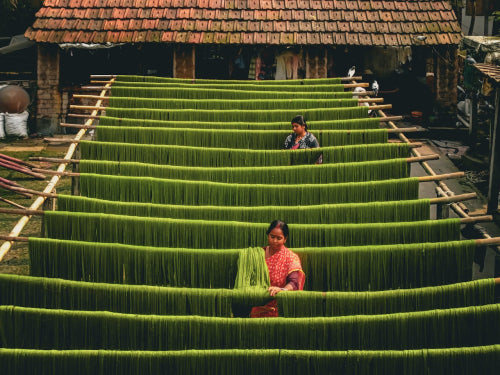
In the bustling villages of Varanasi and the quiet weaving clusters of rural Tamil Nadu, a quiet revolution is underway. Traditional handloom artisans, once sidelined by fast fashion and mass production, are rediscovering their craft's power to build sustainable livelihoods. Local handloom initiatives are more than a trend they represent a vital movement reconnecting culture, community, and commerce across India and beyond.
Fast fashion erodes cultural heritage, sidelining artisans and reducing traditions to trends. At IndieHaat, we champion India's craftspeople with handcrafted sarees, apparel, décor, and skincare rooted in authenticity. Each piece embodies skill and ethical care. Support artisans and preserve India's timeless legacy Shop Now!
Reviving Tradition While Creating Real Opportunity
Handloom weaving has long been the heartbeat of rural India. For generations, families in states like Uttar Pradesh, West Bengal, Andhra Pradesh, and Tamil Nadu have passed down intricate techniques for silk, cotton, khadi, and wool textiles. These crafts are not merely decorative; they form the economic backbone for thousands of households where alternative employment opportunities remain limited.
Today, a fresh wave of community-driven programmes is breathing new life into these traditions. By blending time-honoured methods with contemporary design sensibilities, these initiatives help artisans secure stable incomes while preserving invaluable cultural heritage. Similar efforts are gaining momentum internationally from indigenous craft collectives in Australia to ethical fashion showcases in Singapore and the UAE yet India continues to lead this revival with its rich diversity of regional weaves and artisan clusters.
What makes these local handloom initiatives particularly powerful is their focus on empowering women and marginalised communities. In many villages, weaving cooperatives have become spaces where skill development meets economic independence, fostering pride in ancestral knowledge.
The Rise of Digital Marketplaces and E-Commerce Integration
One of the most transformative shifts has been the emergence of dedicated online platforms that connect rural weavers directly with conscious buyers worldwide. Platforms like IndieHaat enable artisans to showcase their unique creations globally without multiple intermediaries taking significant cuts. A beautifully woven Banarasi silk saree, a soft Khadi kurta, or an elegant Pochampally ikat fabric can now reach customers in Mumbai, Delhi, New York, or Dubai with ease.
This digital visibility has proven especially impactful in regions where physical market access was historically restricted. Artisans often share stories of improved bargaining power and fairer price realisation. In Singapore and the UAE, luxury retailers are increasingly incorporating authentic Indian handcrafted textiles into their collections, attracted by the genuine stories and superior craftsmanship behind each piece.
Beyond sales, these platforms facilitate direct feedback loops between makers and buyers, allowing weavers to adapt designs while staying rooted in tradition. This two-way connection strengthens the entire ecosystem.
Government Schemes and Community-Led Support Programmes
India's Ministry of Textiles has played a pivotal role through schemes like the Handloom Mark, which certifies genuine handwoven products and builds greater consumer trust. Cooperative societies in Varanasi, Maheshwar, and other prominent clusters have effectively leveraged such programmes to upgrade quality standards and access formal domestic as well as export markets.
Internationally, governments in Australia and the UK have rolled out grants supporting indigenous and artisanal crafts. These policies highlight the dual importance of cultural preservation and economic development. In the US and UK, collaborative fashion events featuring Indian handloom textiles have successfully raised awareness and opened new export avenues for rural producers.
Such support systems demonstrate how policy, when aligned with ground-level needs, can create meaningful change for artisan communities.
Sustainability and Ethical Sourcing in Focus
Consumers across the globe are increasingly choosing products that reflect their personal values. The global sustainable fashion movement embodies this shift, with brands committing to ethical practices from raw material sourcing through to the final garment. In India, handloom production aligns perfectly with this ethos it typically involves minimal waste, relies on natural fibres, and supports decentralised rural economies.
According to verified industry analysis, the global sustainable fashion market was valued at USD 7.85 Billion in 2023, reflecting growing consumer demand for ethical and eco-friendly clothing. Indian handloom initiatives are ideally positioned to capitalise on this momentum by offering unmatched transparency and traceability that mass-produced alternatives often lack.
This alignment with sustainability principles not only benefits the environment but also enhances the market appeal of handloom products among conscious buyers in metropolitan cities and abroad.
Real Stories from the Ground: Case Studies That Inspire
In Varanasi, cooperative societies have guided weavers towards more sustainable silk and cotton practices. Many families now enjoy higher and more consistent incomes, enabling investments in children's education and family healthcare. Traditional techniques once at risk of fading are being enthusiastically passed on to younger community members.
Cross-border collaborations are proving equally promising. Fashion weeks and curated exhibitions in the US and UK have prominently featured Indian handloom collections, creating direct bridges between rural producers and international designers. In Singapore and the UAE, cultural exhibitions celebrate these textiles as living symbols of heritage and exceptional craftsmanship. Meanwhile, partnerships in Australia with Aboriginal craft collectives have opened doors for creative exchanges and joint projects that enrich both traditions.
These real-world examples illustrate how strategic initiatives can generate both economic gains and cultural pride.
Navigating Persistent Challenges
Despite notable progress, several hurdles continue to test the sector. Many rural artisans still face limited market reach despite the availability of online tools. Supply chain constraints including fluctuating raw material costs and variable production capacity frequently disrupt steady livelihoods. The migration of younger generations to urban centres remains one of the most pressing concerns, as it threatens the future transmission of specialised weaving skills.
Additionally, meeting regulatory requirements for exports, obtaining necessary certifications, and complying with consumer protection standards across different regions add layers of complexity. Successful programmes are those that tackle these challenges comprehensively through targeted training, technology adoption, and effective policy advocacy.
Opportunities for Economic Empowerment and Innovation
The opportunities ahead are substantial. Local handloom programmes are steadily boosting household incomes and reinforcing rural economies throughout India. International brands in the US, UK, Singapore, and the UAE are recognising the unique value of authentic handcrafted textiles for brand differentiation and compelling storytelling.
E-commerce platforms have established efficient distribution channels that were unimaginable just a decade ago. Creative designers are exploring innovative fusions reimagining traditional weaves for modern lifestyles, ranging from contemporary kurtas and fusion wear to elegant home furnishings and accessories. These creative adaptations are drawing in younger, design-conscious consumers while deeply honouring centuries-old techniques.
Such innovation ensures that handloom remains relevant without compromising its soul.
Looking Ahead: A Future Rooted in Heritage
Handloom initiatives beautifully demonstrate that cultural preservation and economic growth can thrive together. By championing rural artisans, we safeguard living heritage while constructing more equitable and resilient supply chains.
Cross-border collaborations involving Indian weavers, international designers, retailers, and policymakers will prove essential for expanding impact. Consumers also play a decisive role every purchase of handloom products sends a clear message in support of craftsmanship, community wellbeing, and conscious consumption.
As more individuals seek meaningful connections with the items they bring into their lives, the inspiring story of India's handloom artisans provides both motivation and a practical roadmap. Their looms continue to weave not merely fabric, but brighter futures one thoughtful thread at a time.
Frequently Asked Questions
How are local handloom initiatives helping rural artisans in India earn a sustainable income?
Local handloom initiatives are empowering rural artisans by connecting them to digital marketplaces, cooperative societies, and government-backed schemes that improve price realisation and market access. Platforms like IndieHaat allow weavers in clusters such as Varanasi and Tamil Nadu to sell directly to global buyers, cutting out exploitative intermediaries. These programmes also focus on women and marginalised communities, turning weaving cooperatives into hubs of skill development and economic independence.
What role does e-commerce play in reviving traditional Indian handloom weaving?
E-commerce platforms have been transformative for the handloom sector, giving rural weavers direct access to domestic and international buyers without the limitations of physical markets. Artisans can now showcase handcrafted textiles from Banarasi silk sarees to Pochampally ikat fabrics to customers across India, the US, the UAE, and Singapore. Beyond sales, these platforms create feedback loops between makers and buyers, helping weavers adapt their designs to modern tastes while staying rooted in tradition.
Why is Indian handloom considered a sustainable and ethical fashion choice?
Indian handloom production naturally aligns with sustainable fashion values it uses natural fibres, generates minimal waste, and supports decentralised rural economies rather than large industrial supply chains. The global sustainable fashion market was valued at USD 7.85 billion in 2023, and handloom textiles are well-positioned to meet this growing demand thanks to their unmatched transparency and traceability. Choosing handloom products also directly supports artisan livelihoods and helps preserve centuries-old cultural heritage that mass-produced alternatives cannot replicate.
Disclaimer: The above helpful resources content contains personal opinions and experiences. The information provided is for general knowledge and does not constitute professional advice.
You may also be interested in: Unveiling the Enduring Legacy of the Saree
Fast fashion erodes cultural heritage, sidelining artisans and reducing traditions to trends. At IndieHaat, we champion India's craftspeople with handcrafted sarees, apparel, décor, and skincare rooted in authenticity. Each piece embodies skill and ethical care. Support artisans and preserve India's timeless legacy Shop Now!
Powered by flareAI.co