Current Trends in Wedding Sarees
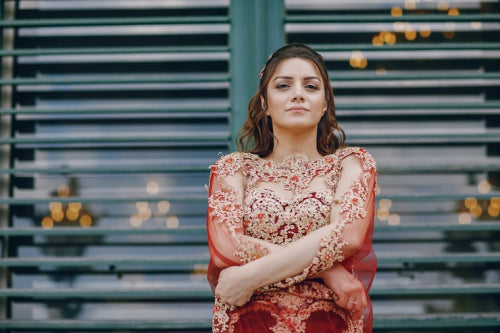
In a sunlit courtyard in Varanasi, a weaver's hands glide rhythmically over a handloom, interlacing golden zari with fine mulberry silk to craft a Banarasi saree destined to grace a bride on her special day. This timeless ritual, embedded in centuries of artistry, stands as a subtle defiance against the relentless pace of fast fashion. The wedding saree transcends mere homage to the past. It emerges as a vibrant canvas where cultural heritage intertwines with sustainable practices and contemporary innovation, reshaping bridal sophistication for today's discerning women. From environmentally mindful weaves to sleek designs that embody subtle opulence, the artisanal saree is capturing hearts, enchanting both brides and digital marketplaces with its enduring appeal.
Fast fashion erodes cultural heritage, sidelining artisans and reducing traditions to trends. At IndieHaat, we champion India's craftspeople with handcrafted sarees, apparel, décor, and skincare rooted in authenticity. Each piece embodies skill and ethical care. Support artisans and preserve India's timeless legacy Shop Now!
The Saree: A Timeless Bridal Anchor
The wedding saree in India represents far more than mere cloth it's a cherished cultural artifact, a narrative etched into each fiber. Whether inherited across generations or meticulously selected for the occasion, it bears the essence of ceremonies and deep sentiments. Modern brides increasingly gravitate toward handmade, artisanal sarees, drawn not only by their aesthetic allure but also by their ties to India's profound textile heritage. India's textiles sectorIndia's textiles sector, among the most ancient in the nation's economy, flourishes due to its robust foundation in diverse fiber and yarn production, ranging from natural options such as cotton, jute, silk, and wool to synthetics including polyester, viscose, nylon, and acrylic.
This variety, deeply connected to agriculture for raw materials like cotton and to the country's age-old customs and traditions in textiles, sets it apart from other sectors. The industry excels in creating an array of products tailored to various market needs, serving both domestic and international consumers. The surge in e-commerce has intensified this interest, as online platforms meticulously assemble collections of handwoven sarees for brides who prioritize genuineness. Be it a luminous Kanjivaram silk adorned with elaborate patterns or a Patola showcasing precise geometry, these sarees are revitalized in the digital realm, linking remote weaving communities to cosmopolitan closets. This shift underscores a broader movement where brides seek pieces that honor tradition while aligning with personal values, fostering a market that values craftsmanship over mass production.
What's Trending in Wedding Sarees?
A prominent evolution is the adoption of eco-friendly options, with organic cotton, handloom silks, and plant-based dyes rising in popularity as brides emphasize sustainability alongside refinement. These materials, typically sourced from modest artisan collectives, resonate with heightened awareness of responsible purchasing. The outcome is sarees that deliver both comfort and visual delight, proving that ethical choices can enhance beauty rather than diminish it.
Minimalist opulence defines another key direction. The era of cumbersome, overly decorated sarees that burdened brides is fading. Contemporary women favor airy textiles, gentle hues such as soft rose and pale sage, and refined needlework that radiates understated grace. Envision subtle zari accents that subtly reflect light, or a Banarasi silk featuring delicate mulberry strands and ornate botanical motifs that radiate sophistication and grandeur without excess. Indian textiles are celebrated for their lush feel, age-old craftsmanship, and striking visuals. Varieties like Banarasi silk Banarasi silk, Kanchipuram, Muga silk, Patola, and Pashmina stand out for their sumptuous surfaces and glossy finish, embodying generations of expert techniques.
Their luxurious appeal stems not solely from cost but from their graceful fall, textural depth, and the narrative embedded in each pattern, handed down over time. Amid a landscape where transient styles quickly wane, these endure as classic, adaptable, and perpetually lavish. They shine at nuptials, complement modern cuts, or in classic drapes, effortlessly commanding attention.
Fusion aesthetics are generating excitement too. Ready-to-wear sarees and those mimicking lehengas provide today's brides with the convenience of global outlines paired with the poise of indigenous weaves. Hybrid Indo-Western creations such as a Banarasi saree matched with a short top or a Jamdani incorporating fresh icons are captivating at celebrations. These approaches appeal to brides desiring adaptability, enabling fluid transitions from rites to festivities. The ascent of fusion sarees marks a major shift, merging classic drapes with innovative elements like capes or belts for a refreshed vibe.
Bold blouses are capturing attention, featuring dramatic sleeves or asymmetrical designs that elevate the overall ensemble. Sustainable and airy materials dominate, with organza and chiffon favored for their lightness and eco-credentials. Unconventional patterns and shades, including geometric motifs inspired by architecture and offbeat palettes like jewel tones or pastels, are redefining norms.
Regional textiles are undergoing a resurgence as well. Banarasi, Kanjivaram, Patola, and Jamdani sarees are reinvented with current motifs, spanning abstract forms to custom emblems. Brides pursue tailored creations, enlisting artisans to weave in personal touches like monograms, significant dates, or symbols drawn from their romances. This personalization echoes a profound quest for uniqueness, transforming every saree into an unparalleled gem. Floral embroidery is poised for widespread appeal, imparting a delicate and refined flair to drapes. Slit sarees introduce a daring edge, with elevated cuts adding flair and movement, ideal for brides embracing boldness.
Artisans and E-commerce: A Modern Renaissance
Driving these developments are the craftspeople adept weavers in locales like Varanasi, Kanchipuram, and Bhagalpur who infuse vitality into venerable practices. In Varanasi, cooperative groups are channeling Banarasi brocades to worldwide audiences via online channels. These sites compile assortments that spotlight India's textile opulence, from Muga silk's radiant glow to Patola's complex dual-weave. Such fabrics encapsulate eras of honed expertise, with each design narrating tales inherited across lineages.
High-profile unions amplify these patterns. A film icon donning a handcrafted Kanjivaram at her vows ignites widespread inspiration, prompting brides to pursue comparable artisanal items. Digital retailers swiftly respond, presenting selections that fuse legacy with current tastes. Projections from Crisil Ratings indicate an 8-10% revenue expansion in the organized retail clothing segment for FY25, propelled by favorable weather patterns, stabilizing prices, and the uplift from celebratory and matrimonial periods.
Weaver clusters are revitalizing fading arts, such as Varanasi artisans adapting Banarasi weaves for digital sales. Global platforms expose these to international clientele, enhancing visibility. Celebrity influences, like Bollywood stars in Paithani or Bandhani, further propel demand for heritage pieces with modern twists.
Challenges in the Artisanal Saree Market
Despite its potential, the artisanal saree arena encounters obstacles. Distribution networks remain precarious, dependent on compact artisan units with constrained yields. Expanding operations while preserving excellence demands careful equilibrium. Cost considerations pose another barrier laborious handwoven sarees command premiums, challenging for value-seeking younger brides. A Kanchipuram weaver once shared, "Crafting one Kanjivaram spans weeks, yet purchasers expect machine-replica pricing."
Fake products present significant threats, with automated duplicates infiltrating markets under the guise of authentic handwork, endangering artisan sustenance. Eco-assertions face examination too. Although brands promote green methods, confirming organic sourcing or dye legitimacy proves complex. For virtual sellers, fostering reliability via openness like artisan bios or accreditations is essential to sustain buyer faith.
Opportunities in the Digital Age
Yet, prospects abound. Virtual bazaars are broadening, uniting craftspeople with overseas enthusiasts yearning for genuine handmades. Partnerships with creators are advancing artisanal threads into premium bridal lines, melding classic methods with avant-garde looks. Matrimonial peaks, integral to India's commerce cycle, persistently spur demand, with environmentally aware brides propelling advancement for green labels.
Technological advancements reshape buying journeys. Three-dimensional previews and virtual reality fittings enable brides to envision drapes digitally, heightening assurance in web acquisitions. A platform I examined permits viewing a Banarasi silk's cascade on one's form, capturing zari's sparkle precisely a transformative tool for distant shoppers. Innovations like AR try-ons and blockchain for traceability enhance transparency and engagement.
A Memorable The Saree as a Cultural Statement
The wedding saree evolves beyond apparel it's a declaration of culture, linking yesteryears to tomorrows. Handcrafted sarees, rich in woven tales and eco-principles, are set to shape bridal trends ahead. Authorities foresee amplified emphasis on provenance and equitable commerce seals, guaranteeing each saree conveys narratives of aesthetics and moral making. Brides gain opportunities to embody their principles, enveloping in legacy amid novelty. For dream-weaving artisans, it's affirmation that their age-old skill stays vital, gleaming in a fresh epoch's light.
Frequently Asked Questions
What are the top wedding saree trends for 2025?
The leading wedding saree trends for 2025 include eco-friendly materials like organic cotton and handloom silks with plant-based dyes, minimalist opulence featuring lighter fabrics in soft hues like pale rose and sage, and fusion aesthetics that blend traditional drapes with modern elements. Brides are also embracing personalized touches, bold blouses with dramatic sleeves, and sustainable options that prioritize craftsmanship over mass production.
Which traditional Indian saree fabrics are best for weddings?
Premium wedding saree fabrics include Banarasi silk known for its golden zari work and mulberry silk base, Kanchipuram silk celebrated for its rich texture and durability, Muga silk prized for its natural golden sheen, and Patola featuring intricate geometric patterns with complex dual-weave techniques. These handwoven fabrics are valued for their luxurious feel, age-old craftsmanship, and the cultural narratives embedded in each design, making them timeless choices for bridal wear.
How is e-commerce changing the wedding saree market for brides?
E-commerce is revolutionizing the wedding saree market by connecting remote weaving communities directly with modern brides through curated online collections of authentic handwoven sarees. Digital platforms now offer advanced features like 3D previews, virtual reality fittings, and AR try-ons that allow brides to visualize how sarees will look before purchasing. This digital transformation has made artisanal sarees more accessible globally while supporting traditional craftspeople in regions like Varanasi, Kanchipuram, and Bhagalpur.
Disclaimer: The above helpful resources content contains personal opinions and experiences. The information provided is for general knowledge and does not constitute professional advice.
You may also be interested in: Fusion Ethnic Wear: Blending Tradition with Modern Trends
Fast fashion erodes cultural heritage, sidelining artisans and reducing traditions to trends. At IndieHaat, we champion India's craftspeople with handcrafted sarees, apparel, décor, and skincare rooted in authenticity. Each piece embodies skill and ethical care. Support artisans and preserve India's timeless legacy Shop Now!
Powered by flareAI.co