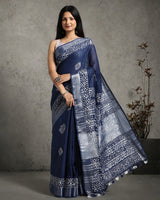
Tranquil Slub Linen Wax Batik Hand Dyed Saree Ink Blue
Handcrafted at Indiehaat Bhagalpur Unit. Master Weaver: Danish.

Add a touch of artistry to your ensemble with our Handcrafted Slub Linen Batik Saree. Featuring intricate Batik designs on slub linen fabric, each saree showcases unique artwork and creativity, perfect for expressing your individual style.
Work: Batik
Measurements: Length - 6.3-6.4 meter
*Blouse: Pallu Color
Blouse Piece: Yes
Fabric: Slub Linen
Package Contains: 1 Saree with Blouse (attached)
Wash Care: Gentle Handwash with Mild detergents. Wash separately. Dry in Shades.
Disclaimer:
Color hues may slightly vary from that which appears in the image due to different screens and displays
Minor irregularities is the uniqueness of handcrafted products and makes each piece exquisite
| Fabric / Material | Slub Linen |
| Craft / Technique | Wax Batik Print |
| Colour | Blue |
| Origin / Cluster | Bhagalpur |
Slub linen fabric features irregularities or "slubs" in its texture, adding a rustic charm to the fabric. It retains the breathability and durability of linen while offering a unique visual texture, making it a popular choice for sarees with a natural and relaxed aesthetic.
Exchange: *Easy exchange is available within 3 days of receiving the product.
*No exchanges on home decor items.
*Unboxing video is required.
Return: *Only for damaged/wrong products.
*Unboxing video required.
Learn More
How is the batik spread across the Tranquil saree?
The ink-blue body is kept fairly open, with sparse white medallions spaced across it. The work gets dense towards the pallu, where batik dots and florals fill the surface. That balance keeps the draped front calm and quiet while putting the detail on the shoulder.
What finishes the border and pallu?
A white patterned batik band runs along the border with a silvery edge, and the same silver carries into the pallu, which ends in tassels. On the deep blue, the silver line gives a soft glint that frames the saree without making it look festive-heavy.
Is a blouse piece included?
Yes, the blouse piece is attached to the saree and comes in the pallu colour. Detach it before tailoring. A simple round or boat neck with short sleeves suits the calm look of this design; keep it plain so the pallu stays the focus.
What is the difference between wax batik and a batik print?
In wax batik, wax is applied by hand to the cloth before dyeing, and wherever the wax sits, the dye cannot reach. Removing the wax reveals the pattern. Because each colour is a separate round of waxing and dyeing, the pattern carries the slight irregularity of hand work.
How should I wash the ink-blue saree?
Wash it separately and by hand with a mild detergent, rinse promptly, and dry it in the shade. Keeping it out of strong sun helps the blue stay rich and the white motifs stay clean. Press the water out in a towel rather than wringing it.
What jewellery suits it?
Silver is the natural match for the silvery border, and oxidised pieces suit the handmade batik. A pair of silver jhumkas or a long chain works for daytime. Pearl studs keep it soft for the office. For an evening, a statement silver choker sits well against the ink blue.
Where is it made?
It comes from Bhagalpur in Bihar. The slub linen base is hand dyed in wax batik, a craft with roots in Indonesia that is now popular in many parts of the world. So the saree carries both the rustic texture of slub linen and the hand of the batik artisan.





More sarees in blue
View all 17% off
 14% off
 32% off
 8% off
 12% off
 32% off
 10% off
 10% off
Handcrafted by Bhagalpur artisans
View all 18% off
 32% off
 17% off
 10% off
 23% off
 23% off
 12% off
 24% off
Sarees for festive days
View all 18% off
 27% off
 22% off
 40% off
 14% off
 18% off
 32% off
 10% off
RECENTLY VIEWED PRODUCTS
Ada-e-Ramazan, All Products, Batik, Batik Sarees, Best Selling Products, Bhagalpur Sarees, Blue Sarees, Diwali Sale, Earthy Sarees, Everyday Tints, Festive Sarees, Independence Day Sale, Kitty & Brunch Sarees, Linen And Cotton Sarees, Linen Sarees, New Arrivals, Newest Products, Office & Workwear Sarees, Printed & Painted Crafts, Puthandu Sale, Rang Rasiya, Reception, Republic Day Collection, Same Day Bangalore Delivery, Sarees, Savan, Slub Linen Saree Batik Print, Slub Linen Sarees, Slub Linen Sarees, Summer & Travel Sarees, Ugadi - The New Year