


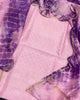
Chikankari Pure Chanderi Silk Lucid White Kurta & Dupatta
Handcrafted at Indiehaat Chikankari Unit in Lucknow, Master Artisan: Arun.

Experience elegance with our Handcrafted Chikenkari Chanderi Silk Kurti Dupatta. Adorned with delicate chikankari embroidery on luxurious Chanderi silk fabric, each set offers a perfect blend of style and tradition, perfect for any occasion.
Work: Chikankari, Hand Dyeing
Measurements: Length: Kurti - 2.9-3.0 meter, Dupatta - 2.4-2.5 meter
Fabric: Chanderi Silk
Package Contains: Unstitched Fabric: Top + Dupatta
Wash Care: Dry clean Preferred. Wash separately. Dry in Shades.
Disclaimer:
Color hues may slightly vary from that which appears in the image due to different screens and displays
Minor irregularities is the uniqueness of handcrafted products and makes each piece exquisite
| Fabric / Material | Chanderi Silk |
| Craft / Technique | Chikankari, Hand Dyeing |
| Colour | White |
| Origin / Cluster | Lucknow |
Chanderi is a traditional ethnic fabric characterized by its lightweight, sheer texture and fine luxurious feel.The fabric borrowed its name from the small town Chanderi in Madhya Pradesh where traditional weavers practice the art of producing textured sarees in cotton and silk.
Exchange: *Easy exchange is available within 3 days of receiving the product.
*No exchanges on home decor items.
*Unboxing video is required.
Return: *Only for damaged/wrong products.
*Unboxing video required.
Learn More
How does the black tie-dye dupatta change the white kurta?
The kurta is white with a scalloped jaali yoke and floral butis; the dupatta is a black, white and tan tie-dye with a tan edge. The monochrome pairing looks graphic and modern, and the dupatta gives the white kurta a sharper edge without taking attention from the tonal embroidery.
Which bottom works with it?
A black straight pant or churidar ties into the dupatta for a striking monochrome look. A white churidar gives a classic all-white kurta with the dupatta as the only contrast. Silver or oxidised jewellery suits both.
Where can I wear the set?
It works well as a polished office kurta. With small styling changes, it suits office parties, relaxed kitty lunches and brunches, and festive gatherings, where the dupatta draped open adds drama.
What comes in the package?
Two pieces: an unstitched kurta length of about 2.9 to 3.0 metres and a dupatta of about 2.4 to 2.5 metres. A bottom is not included, which leaves you free to pair the kurta with churidars, palazzos or straight pants you already own, in a shade picked from the dupatta.
Any tips for my tailor?
Ask your tailor to use a fine needle, finish the seams neatly and place the cut so the embroidered yoke sits centred on the chest. Add a soft lining for body. When pressing, iron on the reverse with a cloth in between, so the raised chikankari stitches are not flattened.
How should I care for it?
Dry cleaning is preferred, as it protects both the chanderi and the hand embroidery. If you do wash it, wash it on its own, gently, and dry it in the shade. Do not wring it, and iron on the reverse with a cloth between the iron and the chikankari.




RECENTLY VIEWED PRODUCTS
All Products, Best Selling Products, Chanderi Silk Dress Material, Chikankari, Embroidered Crafts, Festive Suits, Independence Day Sale, Kitty & Brunch Suits, New Arrivals, Newest Products, Office & Workwear Suits, Office Party Suits, Rakshabandhan Collection, Rang Rasiya, Republic Day Collection, Savan, Serene Festive Suits, Serene Kitty & Brunch Suits, Serene Office & Workwear Suits, Serene Suits, Silk Dress Material, Suits & Dress Material, Valentine Edit, Valentines Edit White, White Suits
