


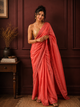
Kota Doria Paithani Embroidery Designer Saree Pink
A workwear pick that breathes through long office hours
Handcrafted at Indiehaat Unit in Kota, Master Artisan: Haq Nawaz

Add a touch of tradition to your ensemble with our Handcrafted Paithani Kota Doria Saree. Meticulously woven with Paithani motifs on lightweight Kota Doria fabric, each saree exudes grace and elegance, perfect for cultural celebrations and festive occasions.
Work: Paithani
Measurements: Length - 6.3-6.4 meter
*Blouse: Pallu Color
Blouse Piece: Yes
Fabric: Kota Doria
Package Contains: 1 Saree with Blouse (attached)
Wash Care: Dry Clean Preferred or Gentle Handwash with Mild detergents. Wash separately. Dry in Shades.
Disclaimer:
Color hues may slightly vary from that which appears in the image due to different screens and displays
Minor irregularities is the uniqueness of handcrafted products and makes each piece exquisite
| Fabric / Material | Kota Doria |
| Craft / Technique | Paithani Weaving |
| Colour | Pink |
| Origin / Cluster | Kota |
Kota Doria cotton fabric is a lightweight, sheer textile originating from Kota, Rajasthan, India. It is woven on traditional pit looms using a blend of cotton and silk yarns, known for its airy texture, fine checkered patterns, and delicate drape, making it ideal for warm weather clothing like sarees and scarves.
Exchange: *Easy exchange is available within 3 days of receiving the product.
*No exchanges on home decor items.
*Unboxing video is required.
Return: *Only for damaged/wrong products.
*Unboxing video required.
Learn More
What makes the pallu stand out?
The pallu is a solid panel holding green parrots among yellow, orange and white flowers on blue branches. Because the panel itself is plain, the birds read clearly even from a distance, which is the effect a Paithani pallu is known for. It is the part of the saree people will notice first.
What does the body look like up close?
The body is sprinkled with tiny flowers in a hand block print, so from afar it reads as a soft, even texture and up close you see the individual sprigs. The edge is a pale satin-look band, simple enough not to compete with the pallu.
Will it stay comfortable through a long function?
Kota Doria is woven to be airy and light, which makes it ideal for warm weather, so it does not weigh on the shoulder. That makes it easy to wear through a long ceremony or a warm evening. Pin the pleats and pallu well, since a light fabric moves freely.
Will the print bleed when washed?
Dry cleaning is preferred, and it is the safest way to keep the hand block print and the pallu colours bright. If you handwash, use a mild detergent, wash it on its own and dry it in shade. Avoid wringing; press the water out gently instead.
What blouse styles go well with it?
The attached blouse piece is in the pallu colour, which gives a clean, matched look. For contrast, a green blouse picks up the parrots, while a navy one echoes the branches. A simple boat neck or elbow sleeve suits the light fabric; keep heavy embellishment off the blouse so the pallu stays the focus.
Who makes these sarees?
It is handcrafted at the Indiehaat unit in Kota, Rajasthan, under master artisan Haq Nawaz. Kota is where Doria fabric comes from, woven on traditional pit looms from a cotton and silk blend. Small irregularities are part of handwork, so each piece differs slightly from the next.




More sarees in pink
View all 18% off
 24% off
 18% off
 30% off
 18% off
 21% off
 18% off
 14% off
Bright & playful sarees for festive days
View all 17% off
 20% off
 8% off
 32% off
 15% off
 12% off
 35% off
 21% off
Handcrafted by Kota artisans
View all 22% off
 28% off
 33% off
 18% off
 25% off
 18% off
 18% off
 22% off
RECENTLY VIEWED PRODUCTS
Ada-e-Ramazan, All Products, Best Selling Products, Cotton Sarees, Diwali Sale, Evening & Dinner Sarees, Festive Sarees, Handwoven Crafts, Kota Cotton Sarees, Kota Doria Pure Cotton Saree Embroidered, Kota Doria Saree Handblock Printed Paithani Embroidery, Kota Sarees, Linen And Cotton Sarees, New Arrivals, Newest Products, Paithani, Pink Sarees, Playful Festive Sarees, Playful Sarees, Playful Wedding & Reception Sarees, Puthandu Sale, Reception, Sarees, Savan, Ugadi - The New Year, Valentine Edit, Valentines Edit Pink, Wedding & Reception Sarees
