


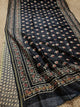
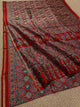
Goonj Chanderi Silk Zesty Red Ajrakh Printed Saree
Handcrafted at Indiehaat Weaving Unit in Chanderi, Madhya Pradesh. Master Artisan: Zuned

Elegant Chanderi Silk Saree featuring traditional Ajrakh Printing. Lightweight, breathable, and perfect for festive occasions or cultural events. A timeless blend of heritage craftsmanship and contemporary charm for your wardrobe.
Work: Ajrakh Print
Measurements: Length - 6.3-6.4 Meter (With Blouse)
Blouse Piece: Yes (Attached)
Fabric: Handloom Chanderi Silk Cotton
Package Contains: 1 Saree with attached Blouse
Wash Care: Dry Clean Only. Keep them in separate bags in a dry place. Change folds and expose to non-moist air regularly. Dry in Shades.
Disclaimer: Color hues may slightly vary from that which appears in the image due to different screens and displays
Minor irregularities is the uniqueness of handcrafted products and makes each piece exquisite.
| Fabric / Material | Chanderi Silk |
| Craft / Technique | Ajrakh Block Print |
| Colour | Red |
| Origin / Cluster | Jaipur |
Ajrakh Print is a traditional textile printing technique where carved wooden blocks are dipped in natural or pigment dyes and stamped onto fabric to create intricate patterns. Practiced in India for centuries, it is known for its detailed motifs, vibrant colors, and eco-friendly process. Common in sarees, dupattas, and home textiles, Ajrakh Printing showcases artisanal craftsmanship.
Exchange: *Easy exchange is available within 3 days of receiving the product.
*No exchanges on home decor items.
*Unboxing video is required.
Return: *Only for damaged/wrong products.
*Unboxing video required.
Learn More
What makes the fan motifs on the Goonj saree stand out?
The body carries rows of cream fan and crescent shapes, spaced evenly so the pattern reads clearly even from a distance. Because they sit in neat lines rather than a crowded jaal, the red ground has room to show, and the saree looks festive without feeling busy. Being block printed, the rows can shift slightly from one stamp to the next.
How do the border and pallu finish the look?
A black and cream zigzag band with a thin gold stripe runs along the edge, giving the saree a sharp, graphic frame. The pallu is the most worked part, ending in pointed leaf shapes, so when you drape it over the shoulder the most detailed section sits right where people look.
Is Chanderi silk sheer, and what should I wear under it?
Chanderi is a light, fine weave with a slight sheerness, which is what keeps it airy. On this saree the red ground and printed rows hide most of it, but a well-fitted red or maroon cotton petticoat will give clean pleats and full cover. Avoid a much lighter petticoat, which can show through at the pleats.
Does it come with a blouse piece?
Yes. The blouse piece is attached to the saree, and the full length is 6.3 to 6.4 metres including it. Your tailor simply separates it from the end before stitching, so you have the blouse fabric ready alongside the saree.
How do I keep the printed colours at their best?
To keep the block-printed colours at their best, this saree is dry clean only. Don't spot-clean with water at home; if something spills, blot it gently and take it to a dry cleaner. If it ever gets damp, dry it in the shade, and store it in its own bag in a dry place.
Where can I wear the Goonj saree?
It sits most comfortably at work, where the ordered rows and graphic border look polished rather than loud. It also carries well to festive gatherings, temple visits and puja at home, and evening dinners, where the more worked pallu does more of the talking.



More sarees in red
View all 14% off
 15% off
 17% off
 32% off
 9% off
 17% off
 6% off
 7% off
Earthy-toned sarees for festive days
View all 14% off
 30% off
 20% off
 15% off
 32% off
 15% off
 16% off
 12% off
Handcrafted by Jaipur artisans
View all 16% off
 16% off
 18% off
 18% off
 18% off
 18% off
 18% off
 15% off
RECENTLY VIEWED PRODUCTS
Ada-e-Ramazan, Ajrakh, All Products, Best Selling Products, Chanderi Silk Sarees, Diwali Sale, Earthy Evening & Dinner Sarees, Earthy Festive Sarees, Earthy Kitty & Brunch Sarees, Earthy Office & Workwear Sarees, Earthy Sarees, Earthy Temple & Puja Sarees, Evening & Dinner Sarees, Festive Sarees, Ganesha Chaturthi, Jaipur Sarees, Kitty & Brunch Sarees, New Arrivals, Newest Products, Office & Workwear Sarees, Printed & Painted Crafts, Puthandu Sale, Rang Rasiya, Sarees, Savan, Silk Sarees, Silk Sarees Ad, Teej, Temple & Puja Sarees, Ugadi - The New Year, Valentine Edit, Valentines Edit Red, VaraMahalakshmi Sale
