


Silkmark Tussar Beige Madhubani Sparkling Dupatta & Blue Top
Handcrafted at Indiehaat Bhagalpur Unit. Master Weaver: Wasif.

Make a style statement with our Handcrafted Silkmark Tussar Madhubani Suit. Featuring traditional Madhubani paintings on Tussar silk fabric, each suit exudes elegance and charm, perfect for weddings, festivals, and special occasions, adding a touch of cultural flair to your look.
Work: Madhubani Blockprint
Measurements: Top: 2.4-2.5 Meter Length, Width: 44 Inches
Dupatta: 2.3-2.4 Meter Dupatta, Width: 32-33 Inches
Fabric: Silkmark Certified Tussar Silk
Package Contains: Unstitched Fabric: Top + Dupatta
Wash Care: Dry Clean Only. Keep them in separate bags in a dry place. Change folds and expose to non-moist air regularly. Dry in Shades.
Disclaimer:
Color hues may slightly vary from that which appears in the image due to different screens and displays
Minor irregularities is the uniqueness of handcrafted products and makes each piece exquisite
| Fabric / Material | Tussar Silk |
| Craft / Technique | Madhubani Block Print |
| Colour | Blue |
| Origin / Cluster | Bhagalpur |
Exchange: *Easy exchange is available within 3 days of receiving the product.
*No exchanges on home decor items.
*Unboxing video is required.
Return: *Only for damaged/wrong products.
*Unboxing video required.
Learn More
What is on the dupatta?
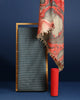
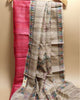
Wide borders of bright triangles and floral bands frame the dupatta in yellow, red and green, and small florals dot the tan ground. The colour sits at the edges, so it frames the dupatta rather than filling it, while the denim-blue top stays plain.
How do I style the blue top?
The top reads as a denim or cornflower blue. White or beige bottoms keep it crisp; a mustard bottom picks up the yellows in the borders. Silver jewellery suits the cool blue.
Why does the dupatta have a streaky, uneven texture?
That is the character of tussar. Its thread comes from a wide-winged moth and is naturally yellowish-brown, so the beige ground shows variations in tone and texture rather than a flat, uniform finish. Minor irregularities are part of handcrafted products; here they are a feature of the fabric, not a defect.
Is the print colour-fast?
Treat the printed dupatta gently: dry clean only, no home washing, and keep perfume and water off the motifs. Hand processes can vary, so minor differences in colour are part of the craft.
Will the colours match the photos?
Very close, but screens vary, so a shade may look slightly brighter or softer in person. Tussar also has natural variation in its tone, so daylight shows the true colours best.
Are small irregularities a defect?
No. Minor irregularities are part of handcrafted products: a slightly uneven line in the Madhubani or a variation in the tussar's texture and tone. They are what make each set individual, and why no two dupattas look exactly alike.
Is the suit stitched?
No. It comes as unstitched fabric: a top length and a dupatta. That means you can have the kurta tailored to your exact measurements and preferred cut, whether straight, A-line or with a collar.



RECENTLY VIEWED PRODUCTS
All Products, Best Selling Products, Bhagalpur Suits, Blue Suits, Festive Suits, Independence Day Sale, Kitty & Brunch Suits, Madhubani, New Arrivals, Newest Products, Office & Workwear Suits, Office Party Suits, Playful Festive Suits, Playful Kitty & Brunch Suits, Playful Suits, Printed & Painted Crafts, Puthandu Sale, Rakshabandhan Collection, Rang Rasiya, Republic Day Collection, Savan, Silk Dress Material, Silkmark Certified Products, Silkmark Certified Suits, Suits & Dress Material, The Summer Affair, Tussar Silk Madhubani Dupatta And Plain Tussar Silk Top
