


Pratibha Mashru Alfi Katan Silk Saree Deep Aubergine
Handcrafted at Indiehaat Varanasi Unit, Master Weaver: Zaid.

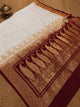
Pratibha Mashru Alfi Katan Silk Brocade Weaving Saree is a magnificent creation that embodies the timeless elegance of Banarasi craftsmanship. Handwoven from luxurious Mashru Alfi Katan Silk, this exquisite saree features a rich deep aubergine (plum) base adorned with delicate antique gold Banarasi zari floral butis that add refined sophistication to every drape. The grandeur of the saree is further enhanced by its heavily woven border and pallu, showcasing intricate botanical vines and traditional floral motifs crafted in shimmering metallic zari. Smooth in texture with a graceful fall and natural silk sheen, this saree is an exceptional choice for weddings, receptions, festive celebrations, cultural ceremonies, and heirloom collections. Lovingly handcrafted by master artisan Zaid from Varanasi, every saree reflects generations of weaving expertise preserved through traditional Banarasi looms. Complete with a matching blouse piece, this timeless masterpiece celebrates India's rich textile heritage while offering luxurious elegance for every special occasion.
Product Specifications
Fabric: Mashru Alfi Katan Silk
Work: Brocade Weaving
Saree Length: 5.5 - 5.75 Meter Approx.
Blouse Piece: 0.75 Meter Included
Package Contains: 1 Saree with Blouse Piece
Collection: Pratibha
Artisan: Zaid
Craft Cluster: Varanasi, Uttar Pradesh
Country of Origin: India
Care Instructions
Dry clean only. Store wrapped in a soft muslin cloth in a cool, dry place. Iron on low heat using a protective cloth. Avoid direct sunlight, moisture, bleach, and harsh chemicals to preserve the silk and intricate zari weaving.
Authenticity Note
Every Banarasi saree is individually handcrafted by skilled artisans. Slight variations in weave, texture, and zari detailing are natural characteristics of genuine handmade textiles and celebrate authentic Banarasi craftsmanship.
| Fabric / Material | Mashru Alfi Katan Silk |
| Craft / Technique | Brocade Weaving |
| Colour | Purple |
| Origin / Cluster | Banaras |
Mashru Alfi Katan Silk is renowned for its luxurious texture, graceful drape, and rich natural sheen. Woven from premium silk yarns, it offers exceptional comfort while maintaining the elegance and durability expected from authentic Banarasi textiles. Its refined finish makes it a preferred choice for bridal and ceremonial wear.
**The Heritage of Banarasi Weaving**
The weaving traditions of Varanasi have flourished for centuries, with artisans passing their skills from one generation to the next. Every Banarasi saree is woven on traditional looms using time-honoured techniques, preserving one of India's most celebrated textile legacies.
**The Beauty of Brocade Weaving**
Brocade weaving is among the finest expressions of Banarasi craftsmanship, where intricate metallic zari is woven directly into the silk to create luxurious floral butis, botanical vines, and ornate borders. The elaborate pallu and richly detailed motifs make every saree a timeless work of art.
Exchange: *Easy exchange is available within 3 days of receiving the product.
*No exchanges on home decor items.
*Unboxing video is required.
Return: *Only for damaged/wrong products.
*Unboxing video required.
Learn More
How are the motifs arranged?
The body is scattered with small antique gold floral butis set in neat rows, leaving plenty of plain aubergine silk between them. The border and pallu then turn dense, with botanical vines and floral motifs woven closely in metallic zari. The quiet body and heavy pallu give it a classic Banarasi balance.
What shade is deep aubergine?
A rich plum, a purple with red in it, that reads warm in daylight and deepens towards wine under evening lights. It is a softer alternative to maroon at a wedding. Gold, polki or temple jewellery all sit comfortably with the antique gold zari.
Which occasions suit it best?
Weddings and receptions come first; the heavy zari pallu is made to be seen in a crowd. It is equally right for an engagement or roka, a puja or temple visit, a formal dinner and the big festivals. Its quieter aubergine body keeps it from feeling over the top at smaller gatherings.
How long is the saree, and what comes with it?
The saree is about 5.5 to 5.75 metres long, and a matching blouse piece of 0.75 metres comes with it. The blouse piece is separate, so you can have it stitched in any style, from a simple round neck to a deep back with zari-edged sleeves.
Is it comfortable to wear for hours?
Mashru Alfi katan silk is lightweight yet durable, smooth to the touch and comfortable for long wear. It falls gracefully and holds its pleats, so it stays neat through a wedding, a reception or an engagement. The heavier zari sits in the border and pallu rather than across the body.
How should I iron it?
On low heat only, with a protective cloth between the iron and the saree, especially over the border and pallu where the zari is densest. Do not spray water on the silk, since moisture can mark it. For anything beyond a light press, take it to a dry cleaner, as the saree is dry clean only.




More sarees in purple
View all 12% off
 12% off
 11% off
 14% off
 12% off
 22% off
 14% off
 23% off
Rich & regal sarees for weddings & receptions
View all 14% off
 20% off
 14% off
 14% off
 20% off
 40% off
 38% off
 34% off
Handcrafted by Banaras artisans
View all 27% off
 34% off
 13% off
 13% off
 20% off
 27% off
 22% off
 18% off
RECENTLY VIEWED PRODUCTS
Ada-e-Ramazan, All Products, Banaras Sarees, Banarasi & Brocade, Banarasi Silk Saree, Best Selling Products, Diwali Sale, Engagement & Roka Sarees, Evening & Dinner Sarees, Festive Sarees, Handwoven Crafts, New Arrivals, Newest Products, Puthandu Sale, Regal Evening & Dinner Sarees, Regal Festive Sarees, Regal Sarees, Regal Temple & Puja Sarees, Regal Wedding & Reception Sarees, Sarees, Savan, Silk Sarees, Silk Sarees Ad, Temple & Puja Sarees, Ugadi - The New Year, Ugadi Sale, VaraMahalakshmi Sale, Varanasi (Zaid), Wedding & Reception Sarees, Wedding Collections
