The Sari as Art, and Political Statement
Quick Listen:
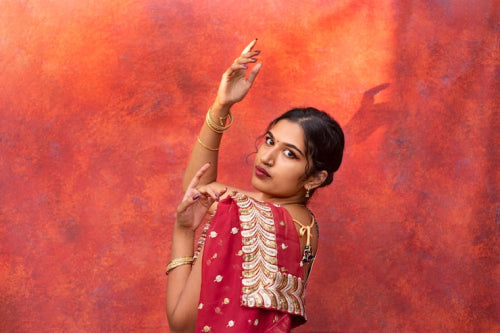
The sari six yards of fabric that drape with effortless grace has never been just clothing. Across centuries, it has served as a powerful medium for expressing identity, resistance, and belonging. Today, from the debating chambers of India's Parliament to university lecture halls in the United States, museum galleries in the United Kingdom, multicultural events in Singapore and the United Arab Emirates, and sustainability discussions in Australia, the sari remains both an ancient art form and a contemporary political statement.
Rooted in the Indian subcontinent for an estimated 5,000 years, the garment carries deep historical resonance. During the Swadeshi movement, hand-spun khadi saris became visible symbols of defiance against colonial rule. In modern India, political figures continue this tradition by choosing weaves that reflect their regional origins whether a lustrous Banarasi silk or an understated Kanchipuram cotton signaling federal diversity and cultural continuity in public life. Prominent parliamentarians have deliberately used bold drapes and striking colors to amplify their presence during high-profile debates and media appearances.
This symbolic power now resonates far beyond India's borders, carried by vibrant diaspora communities and supported by rising global demand for authentic, ethically produced textiles. Sarees remain the dominant category in the handloom product market, accounting for 37.5% of the segment in 2025. Industry analysts value the overall handloom market at USD 8,869.9 million in 2025, with projections estimating growth to USD 19,688.0 million by 2035 a steady compound annual growth rate of 8.2%. This expansion is fueled by growing consumer preference for sustainable craftsmanship, environmentally conscious production, distinctive designs, government-backed artisan programs, and the rapid rise of e-commerce platforms that connect small-scale weavers directly with buyers in cities and overseas markets.
Fast fashion erodes cultural heritage, sidelining artisans and reducing traditions to trends. At IndieHaat, we champion India's craftspeople with handcrafted sarees, apparel, décor, and skincare rooted in authenticity. Each piece embodies skill and ethical care. Support artisans and preserve India's timeless legacy Shop Now!
The Sari as Political Language in India
In India's parliamentary setting, the sari functions almost as a second language. Elected representatives frequently select handloom saris linked to their home states or constituencies: a richly brocaded Banarasi might evoke the cultural legacy of Uttar Pradesh, while a restrained handwoven cotton can project simplicity and rural connection. These sartorial decisions are rarely accidental; they deliberately reinforce regional pride within a diverse federal structure and maintain visible ties to cultural heritage amid fast-changing governance.
Successive governments have reinforced this tradition through targeted policies. The Ministry of Textiles supports handloom clusters across the country, funds skill-development programs, and promotes market linkages. Such measures position handwoven textiles as credible, low-impact alternatives in an era increasingly critical of fast fashion's ecological footprint.
Urban Reinvention and Everyday Wear in India
Contemporary urban India is actively reinterpreting the sari for modern routines. Young professionals now pair classic drapes with sneakers, structured blazers, or minimalist blouses, merging tradition with functionality. A new generation of startups and direct-from-artisan marketplaces has brought once-rare regional weaves back into everyday wardrobes, extending the garment's relevance far beyond weddings and festivals.
This shift dovetails with wider sustainability priorities. Handwoven cotton saris, valued for natural breathability and durability, attract consumers in tropical climates who seek long-lasting, low-impact clothing choices.
Heritage Preservation and Diaspora Pride in the United Kingdom
In the United Kingdom, major museums regularly stage exhibitions dedicated to South Asian textiles, where curators document and display the technical brilliance of handloom traditions. These shows do more than preserve objects; they ignite public discussion about heritage, identity, and belonging among British-Indian families. Within cultural venues, the sari quietly asserts diaspora presence while feeding broader conversations about multiculturalism and responsible consumption.
Visibility and Representation in the United States
Across the Atlantic, Indian-American elected officials, academics, and professionals wear saris in congressional offices, courtrooms, and university lecture theaters. The garment becomes a deliberate marker of pride and inclusion. During annual South Asian Heritage Month observances, it bridges professional environments and cultural roots, gently challenging stereotypes and enriching campus dialogues on identity and representation.
Cultural Diplomacy in Singapore and the UAE
Singapore's official multicultural framework regularly features the sari during national celebrations, acknowledging Indian heritage as an integral thread in the city-state's diverse social fabric. In the United Arab Emirates, home to a large and economically significant Indian expatriate population, the garment appears at community gatherings, diplomatic receptions, and cultural events quietly reinforcing historical connections and mutual economic interests.
Migrant Narratives and Ethical Fashion in Australia
Australia's expanding Indian diaspora incorporates the sari into evolving expressions of migration and belonging. University researchers study how traditional attire assists individuals in navigating identity in new surroundings. At the same time, sustainable fashion advocates promote handloom textiles as ethical counterpoints to mass production, aligning the sari with global demands for slower, more responsible industry practices.
Persistent Challenges in a Changing Landscape
Optimism about the sari's future must be tempered by real obstacles. Synthetic fast-fashion alternatives continue to erode market share for handloom products in India and diaspora communities alike. Academic discussions in the US and UK frequently grapple with the fine line between cultural appreciation and appropriation. Many artisan families face ongoing income insecurity, and younger generations increasingly migrate to urban employment, away from traditional weaving. Climate variability and supply-chain volatility further complicate cotton sourcing and reliable exports.
Expanding Opportunities and Soft Power Potential
Despite these pressures, the outlook remains promising. Indian textile exports flow steadily into the United States, United Kingdom, UAE, Singapore, and Australia, where demand for genuine handloom pieces grows among diaspora buyers and ethically minded consumers. Digital marketplaces empower weavers to sell directly to international customers, shortening supply chains and improving livelihoods.
In sustainability-conscious markets particularly Australia, the UK, and the US the handmade character of the sari offers a clear competitive edge. The verified industry forecast reinforces this momentum: the handloom product market is expected to expand from USD 8,869.9 million in 2025 to USD 19,688.0 million by 2035, advancing at an 8.2% CAGR, driven by eco-aware purchasing and improved digital reach.
Six Yards of Strategic Cultural Capital
In the end, the sari is far more than nostalgic attire. Within India, it articulates a political grammar of diversity and resistance. Among diaspora populations in the US, UK, Australia, Singapore, and the UAE, it communicates assurance and continuity. Globally, it functions simultaneously as artwork, economic catalyst, sustainability model, and instrument of soft power.
For policymakers, cultural organizations, fashion entrepreneurs, and diaspora-led enterprises, the sari constitutes valuable strategic capital six yards of fabric that continue to shape identity, influence narratives, and build connections in an increasingly interconnected and identity-conscious world.
Frequently Asked Questions
Why is the sari considered a political statement in India?
The sari functions as a political language in India's Parliament, where elected representatives deliberately choose handloom saris from their home states to reinforce regional pride and cultural heritage. This tradition dates back to the Swadeshi movement when khadi saris became symbols of defiance against colonial rule. Today, political figures use specific weaves like Banarasi silk or Kanchipuram cotton to signal federal diversity and maintain visible ties to their constituencies during public appearances and debates.
How big is the handloom sari market and what is driving its growth?
The handloom product market is valued at USD 8,869.9 million in 2025, with sarees accounting for 37.5% of this segment. The market is projected to reach USD 19,688.0 million by 2035, growing at an 8.2% compound annual growth rate. This expansion is fueled by rising consumer demand for sustainable craftsmanship, environmentally conscious production, e-commerce platforms connecting weavers directly with global buyers, and growing interest in authentic, ethically produced textiles across diaspora communities.
How do diaspora communities use the sari to express identity internationally?
In countries like the United States, United Kingdom, Australia, Singapore, and the UAE, diaspora communities wear saris as deliberate markers of cultural pride and belonging. Indian-American professionals wear them in congressional offices and universities during events like South Asian Heritage Month, while UK museums showcase sari exhibitions that spark discussions about multiculturalism. In Singapore and the UAE, the garment appears at diplomatic receptions and national celebrations, reinforcing cultural connections while challenging stereotypes and enriching dialogues on representation.
Disclaimer: The above helpful resources content contains personal opinions and experiences. The information provided is for general knowledge and does not constitute professional advice.
You may also be interested in: Ilkal Sarees: Unveiling the Elegance of Karnataka's Handwoven
Fast fashion erodes cultural heritage, sidelining artisans and reducing traditions to trends. At IndieHaat, we champion India's craftspeople with handcrafted sarees, apparel, décor, and skincare rooted in authenticity. Each piece embodies skill and ethical care. Support artisans and preserve India's timeless legacy Shop Now!
Powered by flareAI.co