The Craft Economy's Contribution to Rural Employment in India
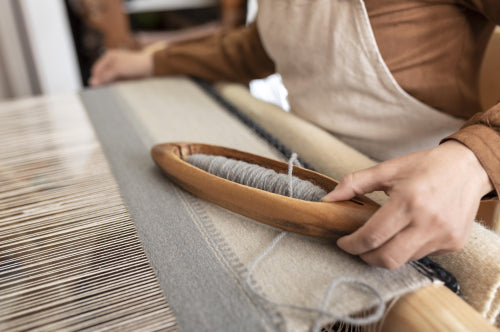
The craft economy in India represents far more than cultural expression or heritage preservation. It is a deeply embedded employment system that sustains millions of rural households through skill-based, decentralized production. From handloom weaving and pottery to textile embellishment and woodcraft, artisanal work continues to function as a parallel livelihood ecosystem alongside agriculture. In many regions, it acts as a stabilizing force for household income, especially when farm-based employment becomes seasonal or uncertain.
What makes this ecosystem particularly significant is its ability to generate employment close to home, without requiring large-scale industrial infrastructure. For rural communities, craft-based work is not just an occupation but a long-standing knowledge system passed across generations, blending tradition with economic necessity.
Fast fashion erodes cultural heritage, sidelining artisans and reducing traditions to trends. At IndieHaat, we champion India's craftspeople with handcrafted sarees, apparel, décor, and skincare rooted in authenticity. Each piece embodies skill and ethical care. Support artisans and preserve India's timeless legacy Shop Now!
The craft economy as a rural employment backbone
Rural employment in India has historically been shaped by agriculture, but agricultural dependence alone often leaves households vulnerable to seasonal income gaps. The craft economy fills this gap by offering non-farm livelihood opportunities that are both flexible and skill-driven. Unlike formal manufacturing sectors that require centralized facilities, artisanal production thrives in home-based environments where work can be integrated into daily life.
This decentralized structure allows families to balance multiple income streams. In many cases, craft work is taken up during agricultural off-seasons, ensuring continuity of earnings throughout the year. This blending of agriculture and craft-based livelihoods strengthens rural economic resilience and reduces migration pressures toward urban centers.
Rural craft clusters and their economic role
Across India, craft production is often organized through informal clusters where entire villages or neighborhoods specialize in specific handicrafts. These clusters function as micro-economies, enabling shared access to raw materials, traditional skills, and local trade networks. They also serve as informal training grounds where knowledge is transferred through observation and apprenticeship rather than formal education systems.
Research on rural artisanal ecosystems highlights how these clusters operate as vital employment hubs in non-urban regions, supporting livelihoods through handicrafts and handloom production while reinforcing cultural continuity. According to studies on rural craft clusters, these systems support localized income generation and help reduce distress migration by anchoring work opportunities within villages, while also facing challenges such as limited market access and resource constraints.
Despite structural challenges, these clusters remain highly adaptive. Many integrate both traditional methods and evolving design sensibilities to stay relevant in changing consumer markets. Their resilience lies in their ability to function without heavy capital investment while still generating consistent employment opportunities.
Rural craft clusters across India represent a significant yet often underappreciated source of non-farm employment, providing livelihoods to millions of artisans who rely on traditional skills, local materials, and entrepreneurial spirit to sustain their communities. These clusters, encompassing both handicrafts and handlooms, contribute substantially to local income generation and serve as workshops for innovation even as they face systemic challenges including raw material shortages, skill erosion, and inadequate market linkages. In many villages, craft activities offer crucial alternatives to agriculture, absorbing labor especially during lean seasons and supporting entire households through decentralized, home-based production models. The informal nature of much of this work, while presenting measurement difficulties for official statistics, underscores its grassroots resilience and adaptability in addressing rural unemployment. Policy efforts have sometimes overlooked the unique needs of craftspersons, leading to languishing traditions in certain regions, yet the potential for revitalization remains strong through targeted support for infrastructure, technology adoption, and institutional strengthening. Studies of specific clusters in states like Rajasthan and Assam reveal how crafts foster economic activity in small towns and villages, helping curb distress migration and preserving cultural knowledge passed across generations. By integrating crafts into broader rural development strategies, India can harness this sector's capacity for inclusive job creation, value addition, and sustainable growth. Enhancing recognition of craft clusters as dynamic economic units will be essential for maximizing their contribution to reducing rural poverty and building vibrant local economies.
Scale of employment and inclusion in the handicraft sector
The handicraft and handloom sector plays a significant role in sustaining rural livelihoods. It is estimated to employ over 64.66 lakh artisans across India, with a large proportion based in rural and semi-urban areas where alternative employment options may be limited. This widespread participation highlights how deeply embedded craft-based work is in the rural economy.
Women form a particularly important part of this workforce, accounting for 71 percent of handloom weavers and 64 percent of total artisans. This level of participation reflects how craft-based livelihoods often enable financial independence for women in rural households, especially in settings where flexible, home-based work is essential. The sector also supports a wide range of communities, including Scheduled Castes, Scheduled Tribes, and Other Backward Classes, making it one of the more inclusive employment structures in rural India.
In addition to providing direct income, craft activities often supplement agricultural earnings. Families engaged in farming commonly rely on craft production during off-seasons, which helps stabilize household finances and reduce vulnerability to crop-dependent income fluctuations.
India's handicraft sector stands as a cornerstone of rural livelihoods, employing an estimated 64.66 lakh handloom and handicraft artisans, with a substantial concentration in rural and semi-urban regions across states like Uttar Pradesh, Rajasthan, Assam, Odisha, West Bengal, and Tamil Nadu. Women form a significant portion of this workforce, accounting for 71 percent of handloom weavers and 64 percent of total artisans, highlighting the sector's critical role in women's economic empowerment and financial independence in village communities. Many artisans engage in craft activities on a part-time or supplemental basis, providing essential income diversification for agrarian households during agricultural off-seasons when farm work is limited. This flexibility is particularly valuable in remote areas where options for non-farm employment remain scarce. The sector's decentralized, labor-intensive nature allows it to operate with minimal capital investment while delivering high value addition, making it accessible to marginalized groups including Scheduled Castes, Scheduled Tribes, and Other Backward Classes. Government initiatives such as the Pehchan Artisan Identification programme have registered over 32 lakh artisans, with nearly 20 lakh being women, facilitating better access to benefits, formalization, and market opportunities. By supporting supplemental income and skill preservation across generations, the craft economy not only mitigates rural unemployment but also fosters inclusive growth, cultural continuity, and resilience in India's villages. As global demand for sustainable, handmade products rises, this sector offers tremendous potential for scaling rural employment while preserving India's diverse artisanal heritage.
Women's participation and household-level economic impact
One of the most defining features of the craft economy is its role in enabling women's participation in rural labor markets. Unlike formal jobs that require relocation or rigid schedules, craft work allows women to contribute economically while managing household responsibilities. This balance is particularly important in regions where mobility is limited due to social or infrastructural constraints.
Beyond income generation, participation in craft activities also strengthens decision-making power within households. When women contribute financially, even in supplementary ways, it often leads to improved access to education, healthcare, and savings behavior within families. Over time, this has a compounding effect on rural development outcomes, as increased financial inclusion at the household level translates into broader community stability.
The intergenerational nature of craft skills further reinforces this impact. Skills are often passed down within families, ensuring continuity of livelihood options even as market demands evolve.
Seasonal livelihoods, migration, and economic stability
One of the persistent challenges in rural economies is seasonal unemployment, particularly in agrarian regions. During non-harvest periods, income instability can lead to temporary migration to urban areas in search of work. The craft economy helps mitigate this trend by providing locally accessible income opportunities that do not require relocation.
Because many craft processes are labor-intensive but flexible in scheduling, they can absorb workforce availability during agricultural downtimes. This dual-livelihood model reduces the economic pressure that often drives distress migration and helps maintain social continuity within villages.
At the community level, this stability has wider implications. When families remain rooted in their local economies, they are more likely to invest in long-term improvements such as education, housing, and local enterprise development. Craft-based employment thus contributes not only to income generation but also to broader rural development.
Market access and the role of modern platforms
While rural craft production is rich in skill and tradition, its growth is often constrained by limited access to wider markets. Many artisans rely on intermediaries, which can reduce profit margins and limit exposure to new buyers. In recent years, digital platforms and curated marketplaces have begun reshaping this dynamic by enabling more direct connections between artisans and consumers.
This shift is particularly important for preserving authenticity while expanding market reach. Platforms that focus on handcrafted goods help artisans showcase products beyond local geographies, allowing traditional crafts to find relevance among contemporary consumers. For example, curated marketplaces such as IndieHaat support this transition by connecting craftspeople directly with buyers who value authenticity, design heritage, and ethical sourcing.
At the same time, digital access introduces new expectations around product consistency, storytelling, and design adaptation. Artisans and craft collectives increasingly engage with evolving consumer preferences while retaining the cultural identity of their work. This balance between tradition and innovation is becoming a defining feature of the modern craft economy.
Building a sustainable future for rural craft livelihoods
The future of the craft economy depends on strengthening the systems that support artisans beyond production alone. This includes improving access to raw materials, enhancing skill development, and building stronger linkages between rural producers and urban or global markets. Institutional support and policy alignment can also play a crucial role in ensuring that craft clusters remain viable economic units rather than fragmented informal activities.
Equally important is the recognition of crafts as a legitimate employment engine rather than a supplementary or informal sector. When treated as a structured economic contributor, the craft ecosystem has the potential to generate more stable income pathways for rural households while preserving cultural heritage.
As consumer awareness around sustainability and ethical sourcing continues to grow, handcrafted goods are gaining renewed relevance. This creates an opportunity for rural artisans to move beyond subsistence-level earnings toward more scalable and resilient livelihoods. With the right combination of market access, skill enhancement, and institutional support, the craft economy can remain a vital pillar of rural employment for generations to come.
Frequently Asked Questions
How many people in India work in the craft and handicraft sector?
The handicraft and handloom sector employs an estimated 64.66 lakh artisans across India, with the majority based in rural and semi-urban areas. This makes it one of the largest sources of non-farm rural employment in the country, especially in states like Uttar Pradesh, Rajasthan, Assam, Odisha, West Bengal, and Tamil Nadu.
What role do women play in India's rural craft economy?
Women are central to India's craft economy, making up 71 percent of handloom weavers and 64 percent of total artisans nationwide. Because craft work is often home-based and flexible, it allows women to earn income while managing household responsibilities, contributing to financial independence and greater decision-making power within families.
How does craft-based work help reduce rural migration in India?
Craft production offers flexible, locally accessible income that doesn't require relocation, making it especially valuable during agricultural off-seasons when farm work is scarce. By giving rural households a reliable non-farm income source close to home, the craft economy helps reduce distress migration to urban areas and supports long-term community stability.
Disclaimer: The above helpful resources content contains personal opinions and experiences. The information provided is for general knowledge and does not constitute professional advice.
You may also be interested in: The Economic Impact of Indias Handicraft Sector in Rural
Fast fashion erodes cultural heritage, sidelining artisans and reducing traditions to trends. At IndieHaat, we champion India's craftspeople with handcrafted sarees, apparel, décor, and skincare rooted in authenticity. Each piece embodies skill and ethical care. Support artisans and preserve India's timeless legacy Shop Now!
Powered by flareAI.co