Six Sustainable Home Decor Trends for 2025
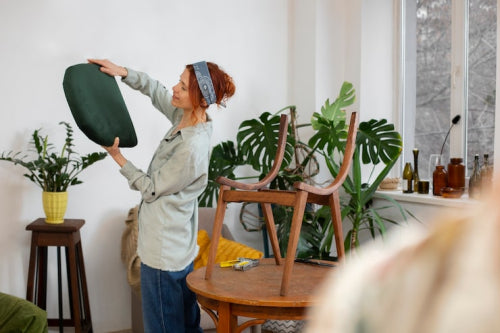
In the heart of a vibrant Mumbai atelier, a skilled craftsman meticulously intertwines strands of jute, converting overlooked remnants into a masterpiece rug destined for an upscale apartment halfway across the globe. What was once considered a marginal pursuit has evolved into the cornerstone of contemporary home styling. With escalating environmental anxieties influencing buyer preferences, the realm of sustainable home decor is experiencing remarkable expansion. The international sustainable home decor sector is anticipated to achieve a valuation of $415.7 billion by 2028, advancing at a compound annual growth rate of 5.4%. This evolution harmoniously fuses age-old Indian artisanal expertise with current ecological mindfulness, yielding environments that are profoundly significant and visually captivating.
Sustainable home decor encompasses the art of fashioning indoor and outdoor settings that captivate the eye while serving practical purposes for residents. Available offerings span from furnishings to diverse floor options such as tiles, wooden and laminated surfaces, vinyl and rubber materials, carpets and rugs, plus additional varieties. These also include household textiles like area rugs, bath linens, bedding essentials, kitchen and dining fabrics, and living room coverings. Customizations in furniture can occur via mechanized or hands-on approaches. Enjoying worldwide acclaim, home decor inspires a broad audience to delve into diverse methods for cultivating aesthetically pleasing and tranquil living spaces.
Sustainability has transcended mere jargon to become an essential directive in design. Across city high-rises and countryside havens, property owners this year are seeking interiors that echo their principles. Indian craftspeople, custodians of ingenuity for generations, lead this movement by interlacing cultural legacy with green advancements. Below, we explore the six pivotal trends steering the course for 2025, drawing from emerging patterns in ethical craftsmanship and eco-traditions like bamboo weaving and natural pigmentation.
Fast fashion erodes cultural heritage, sidelining artisans and reducing traditions to trends. At IndieHaat, we champion India's craftspeople with handcrafted sarees, apparel, décor, and skincare rooted in authenticity. Each piece embodies skill and ethical care. Support artisans and preserve India's timeless legacy Shop Now!
Reclaimed Materials: Beauty in the Discarded
Envision a lively quilted pillow assembled from fabric leftovers or a side table sculpted from salvaged teak wood. Throughout India, creators are alchemizing refuse into marvels, producing items that narrate tales of rebirth. Anchored in the principles of a circular economy, this approach diminishes waste accumulation in dumps while safeguarding artistic heritages. For example, in Rajasthan, castoff cloths are revitalized as tapestries, with their flaws honored as emblems of genuineness. Such creations extend beyond mere adornment they embody a rebellion against throwaway culture.
The allure stems from their distinctiveness. In contrast to factory-made goods, reclaimed artifacts bear the marks of yesteryears, merging vintage allure with current elegance. As individuals emphasize trash minimization, this movement is accelerating, particularly in regions that cherish singularity above sameness. Designers increasingly incorporate reclaimed timber and earthen floors to foster abodes that promote well-being alongside allure.
Moreover, this trend aligns with broader shifts toward responsible aesthetics, where materials like recycled metals and upcycled fabrics not only reduce environmental footprints but also infuse spaces with character. In urban Indian homes, reclaimed elements are becoming staples, offering a narrative depth that mass-produced items lack.
Natural Fibers: Earth's Finest Threads
Materials such as jute, hemp, and organic cotton have ascended from modest origins to prominence in 2025's decor landscape. These botanical textiles, frequently hand-loomed by Indian collectives, appear in floor coverings, draperies, and seating fabrics. In Bengal's western regions, makers produce jute floorings that compete with artificial options in resilience and fashion, dispatching them to environmentally aware patrons internationally. Once undervalued, banana strands now embellish simple light shades and containers, demonstrating that eco-luxury is attainable.
Beyond visual appeal, these substances provide substantial benefits. They decompose naturally, lessening ecological harm, and their creation bolsters countryside livelihoods. For dwellers, opting for natural threads signifies committing to items that deliver tactile and moral satisfaction. This resonates with the rise of sustainable living choices, where organic fabrics and low-emission coatings are staples in modern Indian interiors.
Handwoven throws and stoneware from local brands further elevate this trend, making sustainability an aspirational element in home design. As global markets embrace these, Indian artisans find new avenues to showcase their eco-conscious innovations.
Minimalist, Multi-Functional Designs: Less is More
With urban expansion, living areas contract. City inhabitants are adopting streamlined, adaptable furnishings that maintain elegance amid utility. Indian makers respond with collapsible bamboo tables and sectional storage systems, tailored for confined dwellings. These handmade works feature minimal ecological impact, syncing with worldwide drives for green city habitation.
Consider a bamboo seat that serves as storage or a table that expands into a workspace. Such innovations signify a wider transition to mindful buying, where objects fulfill various roles. For craftspeople, it's an opportunity to display cleverness, fusing classic methods with present-day demands. Trends like modular multifunctional pieces and flexible spaces are dominating, allowing homes to adapt seamlessly to changing needs.
This approach not only conserves space but also promotes longevity, reducing the need for excess purchases and aligning with minimalist philosophies that prioritize quality over quantity in 2025's design ethos.
Eco-Friendly Finishes: Health Meets Heritage
Buyers are increasingly aware of synthetic coating's concealed drawbacks dangers to wellness, planetary harm, and brevity. Introducing herbal colorants and botanical paints, grounded in Indian customs such as plant-based tinting. In Gujarat, creators employ saffron root and blue dye for fabrics, whereas earthen layers grace ceramics and partitions. These harmless substitutes are superior in safety and forge links to the natural world.
Awareness fuels this evolution. Patrons desire adornments free from volatile emissions or aquatic contamination. Through resurrecting time-honored practices, makers satisfy this need, illustrating that green options can rival synthetic vibrancy. Low-VOC finishes and natural dyes are integral to creating healthful, beautiful environments.
Incorporating these into decor ensures longevity and safety, appealing to health-conscious consumers who value heritage-infused innovation in their living spaces.
Local Sourcing: Reviving Regional Crafts
Amid worldwide logistics, proximity emerges as premium. Procuring resources and workforce nearby slashes emissions and fortifies societies. In India, this revives arts like Madhubani illustrations, now gracing vessels and murals. Backing regional makers preserves legacies while fulfilling authenticity cravings.
This surpasses visuals it's fiscal. Village creators secure steady incomes, and purchasers acquire unique treasures. Digital marketplaces magnify these arts, unveiling India's local splendor to international audiences. Prioritizing artisan pieces supports economies and minimizes environmental impact.
As sourcing from India booms, trends in eco-styles and export designs highlight the economic potential for artisans blending tradition with modern demands.
Smart Sustainability: Craft Meets Tech
Visualize a manually woven shade illuminated by sun-powered diodes or a timber carving hiding intelligent controls. This year, green design converges with tech, uniting maker proficiency with progress. Indian workers embed efficient tech into creations, attracting digitally inclined city folk. A Tamil Nadu group, for instance, fashions bamboo illuminators that function as power hubs, uniting legacy with contemporaneity.
This captivates youthful patrons desiring green abodes sans convenience trade-offs. It underscores that green living advances purposefully. Smart integrations and soft tech using natural elements like wood and linen are redefining cozy, efficient interiors.
From energy-saving lighting to biophilic tech, these fusions ensure homes are both innovative and rooted in sustainable practices.
Challenges: The Cost of Doing Good
Green pursuits encounter obstacles. Substances like organic fibers or salvaged timber frequently exceed factory equivalents in expense. Makers confront supply chain issues, from obtaining green resources to upholding equitable commerce standards. Informing buyers on merits endurance, principles, distinctiveness poses challenges, notably in budget-aware sectors.
Nevertheless, momentum builds. Heightened consciousness prompts investments in superiority versus volume. Online venues aid by linking creators straight to worldwide patrons, evading conventional surcharges. Ensuring fair compensation for artisans remains key to scaling ethical decor. Addressing these hurdles requires collaborative efforts to make sustainable choices more accessible without compromising quality or ethics.
Opportunities: A Growing Market
Statistics affirm: the green home decor arena is ascending, with the global market expected to reach $415.7 billion by 2028 at 5.4% CAGR. Extending past personal acquisitions, enterprises adopt handmade goods for presents and lodging aesthetics. Accommodations and workplaces exchange mundane for narrative-rich artisanal works. Digital commerce propels this, granting makers international exposure.
For India's craftspeople, this signifies prime prospects. Merging ancestry with novelty, they don't merely fulfill needs they mold them. Entities emphasizing genuineness and greenness are primed to dominate. Booming sourcing and homegrown brands bringing artistry to interiors underscore this potential. As consumer preferences shift toward eco-conscious and artisanal, the market opens doors for innovation and economic growth in rural communities.
A Memorable Crafting Tomorrow's Homes
Amid planetary climate struggles, selections carry weight. Green home decor transcends ornamentation; it constructs futures uniting allure and accountability. India's makers, with entrenched customs and visionary ingenuity, spearhead this. Their endeavors affirm that thoughtfully crafted abodes mirror identities and ambitions. Selecting items revering earth and humanity isn't mere embellishment it's forging enduring heritage.
Frequently Asked Questions
What are the top sustainable home decor trends for 2025?
The six major sustainable home decor trends for 2025 include reclaimed materials that transform waste into beautiful furniture, natural fibers like jute and hemp for textiles, minimalist multi-functional designs for small spaces, eco-friendly finishes using plant-based dyes, local sourcing to support regional artisans, and smart sustainability that combines traditional craftsmanship with modern technology. These trends reflect a growing consumer preference for environmentally conscious design that doesn't compromise on style or functionality.
How much is the sustainable home decor market expected to grow by 2028?
The global sustainable home decor market is projected to reach $415.7 billion by 2028, growing at a compound annual growth rate (CAGR) of 5.4%. This significant growth is driven by increasing environmental awareness among consumers and their preference for eco-friendly, ethically-made home furnishings. The expansion represents a major shift from sustainable decor being a niche market to becoming a cornerstone of contemporary home styling.
Why are natural fibers like jute and hemp becoming popular in home decor?
Natural fibers such as jute, hemp, and organic cotton are gaining popularity because they offer both environmental and practical benefits. These materials biodegrade naturally, reducing ecological impact, while their production supports rural livelihoods and traditional craftsmanship. Beyond sustainability, natural fibers provide superior durability and unique aesthetic appeal compared to synthetic alternatives, making them ideal for floor coverings, draperies, and upholstery in modern eco-conscious homes.
Disclaimer: The above helpful resources content contains personal opinions and experiences. The information provided is for general knowledge and does not constitute professional advice.
You may also be interested in: 6 Timeless Colors That Never Go Out of Style | Classic Shades for
Fast fashion erodes cultural heritage, sidelining artisans and reducing traditions to trends. At IndieHaat, we champion India's craftspeople with handcrafted sarees, apparel, décor, and skincare rooted in authenticity. Each piece embodies skill and ethical care. Support artisans and preserve India's timeless legacy Shop Now!
Powered by flareAI.co