Handmade Indian Rugs Bring Craftsmanship to Global Homes
Quick Listen:
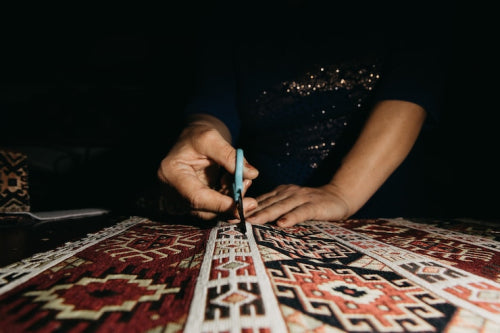
In the heart of Bhadohi, a compact district in Uttar Pradesh, India, the steady rhythm of wooden looms echoes through modest workshops. An artisan, hands weathered by years of practice, weaves vibrant wool into intricate patterns, creating a rug destined for a chic apartment in London or a cozy café in San Francisco. This timeless craft, steeped in centuries of tradition, is experiencing a global resurgence. Handmade Indian rugs, once eclipsed by mass-produced alternatives, are now coveted for their artistry, eco-friendliness, and cultural narratives, transforming interiors worldwide.
The demand for artisanal home décor is soaring. A 2024 Fortune Business Insights report values the global handloom carpet market at $959.45 million, projecting growth to $2,009.96 million by 2032 at a compound annual growth rate (CAGR) of 8.99%. Asia Pacific, with India at the forefront, commands a 34.74% market share. This isn't a fleeting fad it's a cultural shift. Discerning consumers, tired of generic designs, crave pieces that embody authenticity and human touch. Platforms like IndieHaat, an online marketplace dedicated to Indian artisans, are pivotal in delivering these treasures to global markets, one meticulously crafted rug at a time.
The Heartbeat of India's Rug-Making Tradition
Bhadohi, often dubbed India's “carpet city,” is a cornerstone of this craft. Officially named Sant Ravidas Nagar, this district Uttar Pradesh's smallest by area was established in 1994 by separating from Varanasi, surrounded by Varanasi, Prayagraj, Jaunpur, and Mirzapur, as detailed in its Wikipedia profile. Its looms produce rugs renowned for their durability and intricate designs, crafted from wool, cotton, or jute using techniques honed over generations. A single rug can take weeks or months to complete, each knot weaving in India's rich heritage geometric patterns from Rajasthan, Mughal-inspired florals, or bold tribal motifs from the Northeast.
What sets these rugs apart is their individuality. Unlike the sterile precision of machine-made carpets, handmade rugs carry the subtle marks of their makers: a knot slightly askew, a hue that dances in different lights. An artisan from Bhadohi shares, “Each rug is a piece of my life. It holds my skill, my family's traditions, and the spirit of my village.”
Fueling a Global Movement for Sustainable Décor
The global carpet and rug market is thriving, valued at $58.93 billion in 2024 and expected to reach $133.94 billion by 2032, with a CAGR of 11.08%, according to Fortune Business Insights. North America led with a 36.93% market share in 2024. Within this expansive market, handmade rugs are gaining ground. A Spherical Insights study reports the market at $51.73 billion in 2023, forecasting growth to $111.19 billion by 2033 at a 7.95% CAGR, driven by urbanization, rising incomes, and demand for aesthetically pleasing, functional flooring like non-slip surfaces and insulation.
This surge is rooted in a growing preference for sustainability. Handmade rugs, crafted from natural fibers such as wool or jute, are biodegradable and produced with minimal environmental footprint, unlike synthetic, machine-made carpets flooding markets from places like Turkey. A Times of India report underscores a trade disparity: India levies a 20% duty on Turkish machine-made carpets, while Turkey imposes a 46% tariff on Indian handmade rugs, leading to a drop in India's carpet exports to Turkey from $17.08 million in 2015-16 to $6.5 million by January 2025. Despite these hurdles, Indian artisans are reaching new audiences through platforms like IndieHaat, which connects them directly with international buyers.
Interior designers are amplifying this trend, incorporating Indian rugs into diverse settings from sleek lofts in Chicago to rustic retreats in Tuscany. A Mumbai-based designer who sources from Bhadohi says, “A handmade rug brings a room to life. It's not just a floor covering; it's a statement of individuality.” Boutique hotels, Airbnb hosts, and luxury residences are also embracing these rugs to infuse spaces with warmth and cultural depth, catering to guests who value authenticity over mass production.
Navigating Challenges, Seizing Opportunities
The path for handmade rug artisans is not without obstacles. Machine-made carpets, cheaper and quicker to produce, pose stiff competition. The labor-intensive nature of handweaving often requiring hundreds of hours per rug is undervalued, leading to pricing pressures. In rural hubs like Bhadohi, artisans grapple with supply chain constraints and limited market access. Most alarmingly, younger generations are drifting away from the craft, lured by better-paying urban opportunities.
Yet, opportunities abound. The Indian handmade carpet market, valued at $56.4 million in 2024, is projected to grow at an 8.0% CAGR through 2030, fueled by a domestic appetite for personalized, high-quality interiors. India's burgeoning middle and upper-middle classes view these rugs as emblems of sophistication and status, investing heavily in home aesthetics. Globally, e-commerce is a game-changer. IndieHaat not only showcases artisan's creations but also shares their stories, forging emotional connections with buyers. A weaver from Jaipur says, “When my rug sells, it's not just a sale. It's a lifeline for my craft.”
The global market also signals robust growth. A Market Research Future report values the carpets and rugs market at $78.12 billion in 2023, projecting an increase to $120 billion by 2032 at a 5.5% CAGR, driven by housing trends and evolving décor preferences. Handmade rugs, with their artisanal allure, are well-positioned to capture a significant slice of this market, particularly as consumers prioritize ethical and sustainable choices.
Weaving a Future with Purpose
The future of handmade Indian rugs rests on innovation and global reach. Textile experts stress the importance of digital platforms like IndieHaat, which bridge the gap between rural artisans and international markets. Partnerships with interior designers, sustainable brands, and certifications from organizations like GoodWeave International, which promote ethical production, are gaining momentum. These efforts ensure artisans receive fair compensation and work in humane conditions, further enhancing the appeal of their creations.
As global tastes shift toward authenticity, Indian rugs transcend mere décor they are investments in cultural heritage. In Bhadohi, Jaipur, and Panipat, looms continue to hum, each knot a testament to resilience and artistry. A Bhadohi weaver reflects, “My rugs carry my dreams across oceans.” Through platforms like IndieHaat, these dreams are finding homes worldwide, weaving India's traditions into the fabric of global interiors.
Disclaimer: The above helpful resources content contains personal opinions and experiences. The information provided is for general knowledge and does not constitute professional advice.
You may also be interested in: Top 5 Textile Exports Fueling India's Fashion Industry in 2024
Fast fashion erodes cultural heritage, sidelining artisans and reducing traditions to trends. At IndieHaat, we champion India's craftspeople with handcrafted sarees, apparel, décor, and skincare rooted in authenticity. Each piece embodies skill and ethical care. Support artisans and preserve India's timeless legacy Shop Now!
Powered by flareAI.co