Artisans Revive Terracotta Traditions for Urban Home Dcor
Quick Listen:
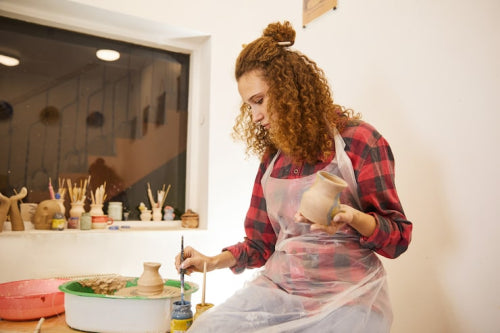
In a sunlit workshop in Tamil Nadu, the rhythmic tap of hands shaping clay echoes through the air. Artisans craft terracotta vases and figurines with precision, breathing life into a tradition that spans millennia. Once on the brink of being overshadowed by mass-produced goods, terracotta is now a coveted element in urban homes from Delhi to Dubai, driven by a global demand for sustainable, artisanal décor. This revival is more than a design trend it's a powerful movement to preserve cultural heritage and uplift artisans in an era of industrialization.
Fast fashion erodes cultural heritage, sidelining artisans and reducing traditions to trends. At IndieHaat, we champion India's craftspeople with handcrafted sarees, apparel, décor, and skincare rooted in authenticity. Each piece embodies skill and ethical care. Support artisans and preserve India's timeless legacy Shop Now!
Terracotta's Renaissance: Artisans Redefine Urban Home Décor
Derived from the Latin for “baked earth,” terracotta has been a hallmark of craftsmanship since ancient civilizations. In India, regions like West Bengal, Uttar Pradesh, and Tamil Nadu are renowned for terracotta artifacts, from sacred sculptures to everyday pots. No longer relegated to rural households or museum displays, these creations are now prized by urban consumers, particularly younger generations seeking eco-conscious and culturally resonant décor. The Indian handicrafts market, valued at $4.56 billion in 2024, is expected to grow to $8.2 billion by 2033, with a steady 6.39% annual growth rate, propelled by demand for sustainable crafts like terracotta.
The rise of e-commerce has been instrumental, connecting rural artisans with global urban markets. Terracotta planters, lamps, and wall art are now easily accessible to buyers in Singapore, the UAE, and beyond. This shift reflects a broader cultural pivot toward décor with depth and narrative. According to Pinterest's 2025 Fall Trends Report, searches for “vintage maximalism” have soared by 260%, while “handpainted furniture” queries have risen 135%, signaling a rejection of generic, mass-produced aesthetics.
Sustainability at the Core
Terracotta's allure stems from its environmental credentials. Crafted from natural clay and fired at low temperatures, it boasts a smaller carbon footprint than industrial ceramics. In India, artisans are tapping into this advantage, producing minimalist lamps and ornate planters that appeal to urban sensibilities. The Indian handicraft sector, which employs over seven million people over half of them women generates 35,000 unique products across 744 clusters, with cities like Varanasi and Chennai as key hubs.
This eco-friendly trend resonates globally. In the US and UK, terracotta is emerging as an antidote to throwaway décor, with retailers importing Indian vases and tiles as premium, heirloom-quality pieces. In Singapore and the UAE, where tradition meets opulence, terracotta graces high-end homes as garden accents or minimalist focal points. Australia is also witnessing a surge in designers who fuse terracotta with contemporary styles, creating pieces that feel both rooted and modern.
Artisans Leading the Charge
In a village in Uttar Pradesh, a collective of women artisans has turned their community into a terracotta powerhouse, selling handcrafted lamps and sculptures via online platforms. Their story is emblematic of India's vibrant handicraft sector, where artisans are not just preserving traditions but thriving in the digital age. The Swadeshi Campaign, launched by India's Ministry of Textiles, aims to amplify this momentum by promoting handcrafted goods as symbols of heritage, targeting urban youth and Gen Z.
The global narrative mirrors India's. In the UK, boutique stores curate Indian terracotta, emphasizing the artisan's stories to attract discerning buyers. In the US, designers incorporate terracotta tiles and pots into sustainable homes, appealing to clients who prioritize authenticity. Initiatives like Vodafone Idea's “Artisans of India,” highlighted in a 2024 market report, showcase local crafts across 12 Indian states, contributing to a global handicrafts market projected to reach $2.4 trillion by 2034, growing at 11.8% annually.
Navigating Challenges
Yet, the path to scaling terracotta's revival is fraught with obstacles. In India, artisans grapple with dwindling clay reserves and inadequate infrastructure, which limit their ability to meet rising demand. International shipping logistics further complicate global distribution. In Western markets, the proliferation of mass-produced terracotta imitations threatens to erode the value of authentic craftsmanship, making it harder for artisans to stand out.
Maintaining the integrity of traditional techniques is another challenge. As terracotta evolves to suit modern preferences sleek vases replacing rustic forms there's a risk that commercialization could erode its cultural significance. Artisans must balance innovation with authenticity to meet the demands of urban consumers who oscillate between minimalist and maximalist aesthetics.
Seizing Opportunities
The global appetite for terracotta presents vast opportunities. In India and the UAE, export potential is expanding, with Indian artisans well-positioned to claim a larger slice of the handicrafts market. Collaborations between artisans and modern designers are yielding innovative designs, such as terracotta wall art with metallic flourishes or planters tailored for compact urban spaces. These partnerships not only elevate the craft but also make it resonate with younger, design-savvy audiences.
Narrative is a powerful tool. Artisans who weave cultural stories into their work a lamp inspired by a West Bengal festival or a vase echoing ancient motifs forge emotional bonds with consumers. E-commerce platforms amplify these stories, enabling artisans to reach buyers in Melbourne or Abu Dhabi. As urbanites seek décor with meaning, terracotta's rich heritage gives it a distinct advantage over mass-produced alternatives.
A Legacy Reimagined
The terracotta renaissance is a testament to the resilience of human artistry. From rural workshops in India to urban design studios worldwide, artisans are redefining an ancient craft for a modern audience, proving that tradition can flourish in a digital, fast-paced world. As the global handicrafts market surges, fueled by a desire for sustainable and meaningful décor, terracotta stands as a beacon of heritage and innovation.
For consumers, embracing terracotta is more than a design choice it's a commitment to culture, sustainability, and the artisans who keep these traditions alive. The next time you're curating your home, consider a terracotta piece. It's not just clay; it's a narrative, a legacy, and a step toward a more intentional way of living.
Frequently Asked Questions
Why is terracotta becoming popular in modern home décor?
Terracotta is experiencing a renaissance as urban consumers increasingly seek sustainable, artisanal décor with cultural depth and narrative. The eco-friendly material, crafted from natural clay with a smaller carbon footprint than industrial ceramics, appeals to design-conscious buyers who reject mass-produced aesthetics. This trend is reflected in Pinterest's 2025 report, which shows a 260% surge in searches for "vintage maximalism" and growing demand for handcrafted, heirloom-quality pieces.
How are Indian terracotta artisans benefiting from the global handicrafts market?
Indian terracotta artisans are thriving through e-commerce platforms that connect them with global urban markets from Dubai to Singapore. The Indian handicrafts sector, which employs over seven million people and generates 35,000 unique products, is projected to grow from $4.56 billion in 2024 to $8.2 billion by 2033. Digital platforms and initiatives like the Swadeshi Campaign are enabling rural artisans to sell handcrafted lamps, planters, and sculptures internationally while preserving traditional techniques.
What makes terracotta décor more sustainable than mass-produced alternatives?
Terracotta's sustainability stems from its natural composition and low-energy production process it's crafted from natural clay and fired at lower temperatures than industrial ceramics, resulting in a significantly smaller carbon footprint. Unlike throwaway décor, terracotta pieces are durable, heirloom-quality items that align with eco-conscious consumer values. This environmental advantage has made Indian terracotta particularly appealing in Western markets and luxury homes in the UAE and Singapore, where buyers prioritize authentic, long-lasting craftsmanship.
Disclaimer: The above helpful resources content contains personal opinions and experiences. The information provided is for general knowledge and does not constitute professional advice.
You may also be interested in: How Handcrafted Pottery Is Making a Comeback in Urban Indian
Fast fashion erodes cultural heritage, sidelining artisans and reducing traditions to trends. At IndieHaat, we champion India's craftspeople with handcrafted sarees, apparel, décor, and skincare rooted in authenticity. Each piece embodies skill and ethical care. Support artisans and preserve India's timeless legacy Shop Now!
Powered by flareAI.co