Artisans Drive Revival of Traditional Weaving Techniques
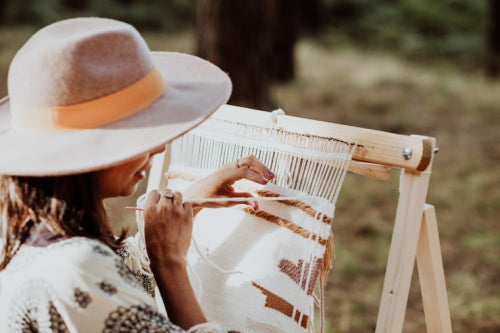
In the dimly lit workshops of Varanasi, skilled artisans sit at wooden handlooms, their hands moving with practiced precision to interlace threads of silk and gold zari into the legendary Banarasi brocades. These intricate fabrics, once reserved for Indian royalty, are now captivating a global audience seeking authenticity in an era dominated by mass production.
Fast fashion erodes cultural heritage, sidelining artisans and reducing traditions to trends. At IndieHaat, we champion India's craftspeople with handcrafted sarees, apparel, décor, and skincare rooted in authenticity. Each piece embodies skill and ethical care. Support artisans and preserve India's timeless legacy Shop Now!
Artisans Lead the Charge in Reviving Traditional Weaving Techniques for a Modern Market
The resurgence of traditional weaving in India represents more than a nostalgic return to craft it's a strategic response to evolving consumer preferences worldwide. Artisans are revitalizing time-honored methods such as Khadi spinning, Banarasi brocade weaving, Kanchipuram silk production, and Pochampally ikat dyeing. These techniques produce textiles that embody cultural depth and environmental responsibility, resonating strongly with buyers in markets from the United States to Singapore, Australia, the United Kingdom, and the United Arab Emirates.
This revival is fueled by a growing rejection of fast fashion in favor of durable, ethically made goods. Handloom products stand out for their use of natural materials and low-carbon processes, aligning perfectly with the priorities of eco-conscious consumers. Government initiatives, including the National Handloom Development Programme, bolster this movement by providing artisans with improved tools, training in contemporary design, and access to online marketplaces.
Direct-to-consumer platforms like IndieHaat are instrumental in this ecosystem, linking weavers straight to international customers interested in genuine handwoven sarees, apparel, accessories, and home décor items. Such connections not only ensure fairer earnings for artisans but also highlight the rich narratives embedded in each piece.
Robust Market Growth Underscores the Revival
Credible industry analyses confirm the strength of this trend. The global handloom products market, valued at USD 8.32 billion in 2024, is forecasted to expand significantly to USD 16.62 billion by 2032, achieving a compound annual growth rate (CAGR) of 9.24% during the period. Asia Pacific holds the dominant position, capturing over 55% of the market share in 2024, largely driven by India's unparalleled weaving heritage.
Complementing this, the broader handicrafts market encompassing textiles, pottery, woodwork, jewelry, and other artisan creations is projected to rise from USD 808.11 billion in 2024 to USD 1,230.73 billion by 2032, with a steady CAGR of 5.40%. This sustained expansion reflects increasing appreciation for products that preserve cultural traditions while offering unique artistic value.
These figures highlight how demand for sustainable and heritage-infused items is propelling growth, particularly in segments like handloom textiles that emphasize handmade excellence over industrial uniformity.
Fusion of Heritage and Modern Aesthetics
Prominent designers are playing a pivotal role in bridging ancient craftsmanship with current fashion sensibilities. Sabyasachi Mukherjee, for instance, consistently integrates handwoven Indian fabrics rich with Khadi textures and elaborate embroideries into his opulent collections, demonstrating that traditional weaves can anchor high-end, innovative designs.
The influence extends beyond clothing. Handwoven textiles are redefining interior spaces, with cushions, throws, and rugs crafted from these materials adding layers of texture and cultural resonance to contemporary homes. This appeal is evident in affluent markets like Australia and the UAE, where sustainable luxury is increasingly prized.
Regional revivals further illustrate the movement's depth. In Bihar, traditional styles are gaining renewed vitality, while Karnataka's communities benefit from restored local techniques. Cross-border collaborations involving designers from Singapore and the UK are producing collections that respectfully innovate on classic patterns, ensuring relevance in today's global wardrobe.
Persistent Challenges Facing the Sector
Despite the momentum, significant obstacles remain. A declining interest among younger generations in pursuing weaving as a profession often due to perceptions of limited economic stability threatens the transmission of specialized skills. Machine-produced replicas flood the market, undermining the perceived value of authentic handlooms and raising concerns over cultural appropriation when motifs are replicated without acknowledgment.
Logistical hurdles compound these issues: inconsistent supplies of quality yarn, the inherently time-intensive nature of handweaving, and difficulties in scaling production to meet larger demands all constrain growth. Artisans frequently navigate these realities with limited resources, highlighting the need for targeted interventions.
Emerging Opportunities and Strategic Advantages
Yet the outlook is overwhelmingly positive, with technology opening new avenues. Digital tools enable provenance tracking through blockchain, while e-commerce expands reach dramatically. Government support continues to facilitate skill upgrades and infrastructure improvements.
The inherent sustainability of handlooms minimal energy use, biodegradable materials positions them favorably as global fashion grapples with environmental accountability. Direct sales models empower artisans economically, fostering community resilience and skill preservation.
A Promising Horizon for Traditional Weaving
Today's weaving clusters blend the rhythmic clack of looms with the glow of screens, as artisans market their creations worldwide. This harmonious integration of tradition and innovation secures the craft's future.
Indian artisans are not just preserving techniques; they are steering a vital cultural and economic renaissance. In an age defined by sustainability and storytelling, handloom textiles deliver profound authenticity. As market projections affirm, this revival is poised to endure, threading heritage seamlessly into the fabric of modern life.
Frequently Asked Questions
How are traditional Indian weaving techniques being revived in the modern market?
Artisans are revitalizing time-honored methods like Khadi spinning, Banarasi brocade weaving, Kanchipuram silk, and Pochampally ikat dyeing to meet the demand for sustainable, ethically made goods. Government initiatives such as the National Handloom Development Programme support this revival by providing improved tools, contemporary design training, and access to digital marketplaces. Direct-to-consumer platforms now connect weavers directly with international customers, ensuring fairer earnings while preserving cultural heritage.
What is the market size and growth potential for handloom and handicraft products?
The global handloom products market was valued at USD 8.32 billion in 2024 and is projected to reach USD 16.62 billion by 2032, growing at a CAGR of 9.24%. The broader handicrafts market, which includes textiles, pottery, woodwork, and jewelry, is expected to grow from USD 808.11 billion in 2024 to USD 1,230.73 billion by 2032 at a 5.40% CAGR. Asia Pacific dominates this market with over 55% share, driven primarily by India's rich weaving heritage.
What are the main challenges facing traditional handloom weavers today?
Traditional weavers face several significant obstacles, including declining interest among younger generations due to perceived limited economic stability, which threatens the transmission of specialized skills. Machine-produced replicas flood the market and undermine the value of authentic handlooms, while logistical issues like inconsistent yarn supplies, time-intensive production processes, and difficulties scaling to meet larger demands constrain growth. Additionally, cultural appropriation concerns arise when traditional motifs are replicated without proper acknowledgment.
Disclaimer: The above helpful resources content contains personal opinions and experiences. The information provided is for general knowledge and does not constitute professional advice.
You may also be interested in: The Growing Collaboration Between Designers and Artisans
Fast fashion erodes cultural heritage, sidelining artisans and reducing traditions to trends. At IndieHaat, we champion India's craftspeople with handcrafted sarees, apparel, décor, and skincare rooted in authenticity. Each piece embodies skill and ethical care. Support artisans and preserve India's timeless legacy Shop Now!
Powered by flareAI.co